Get Full Government Meeting Transcripts, Videos, & Alerts Forever!
Get email alerts on the Utility Rate Case topic
No spam. Unsubscribe anytime.
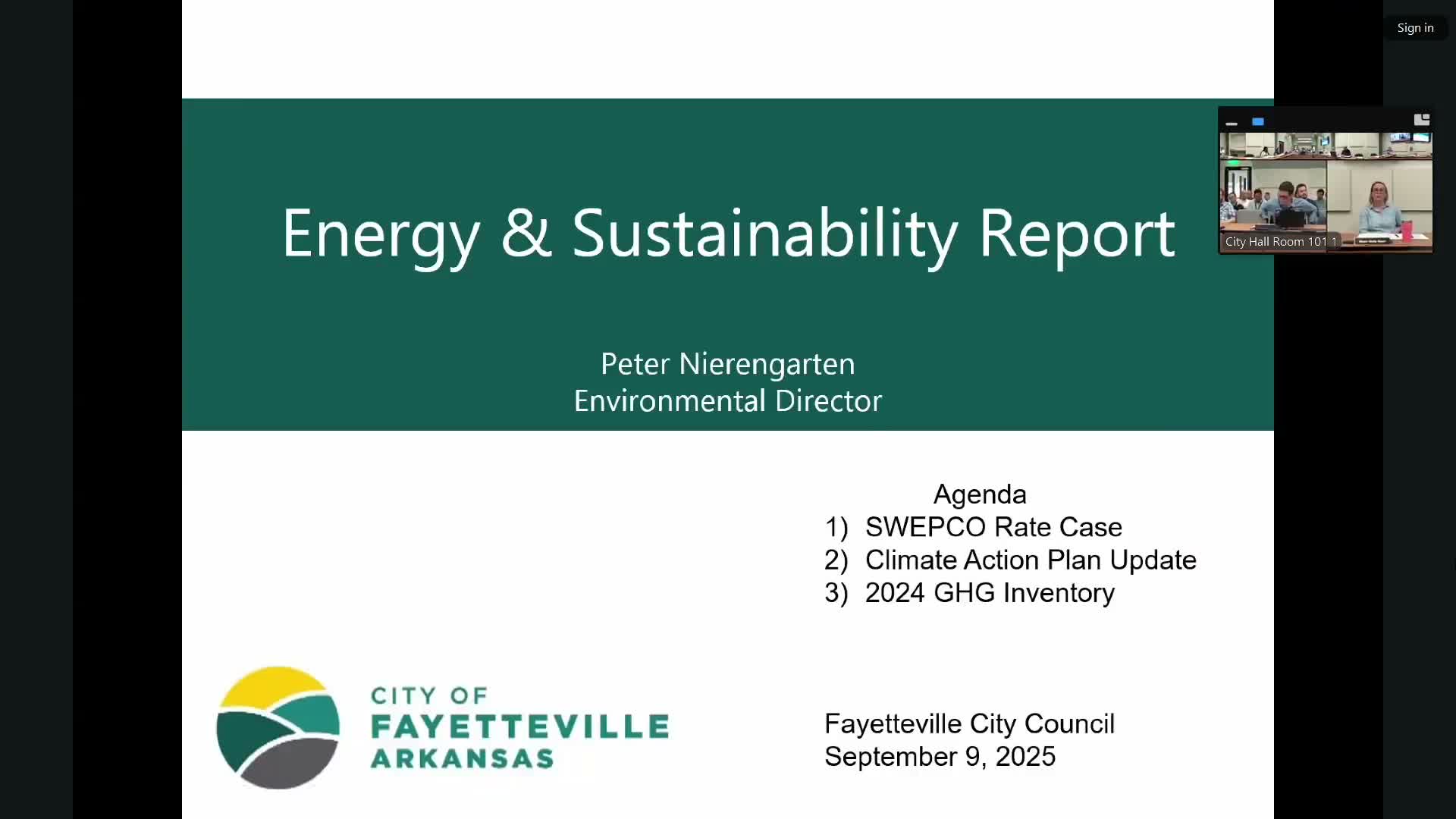
Fayetteville questions SWEPCO rate hike request, touts solar array and a decline in community emissions
Summary
Environmental director Peter Nierngarten said Fayetteville intervened in a SWEPCO rate case seeking a 27.3% residential increase (about $30.46/month for an average home), and highlighted a 3.77 MW solar array and a 6% year‑over‑year reduction in community greenhouse gas emissions.
Fayetteville’s environmental director told the council that the city intervened in a pending SWEPCO rate case and submitted testimony disputing parts of the utility’s request while also updating the council on local solar projects and greenhouse‑gas progress.
Peter Nierngarten said SWEPCO’s March filing seeks a 27.3% increase to residential rates. “The impact of that rate increase on the average residential customer is approximately $30.46 per month,” he said, and noted the company included roughly $31 million in proposed recoveries for improvements to the Flint Creek coal plant in Benton County. The city’s testimony argued SWEPCO had not adequately examined alternatives such as transmission and clean energy from wind and solar.
The rate‑case schedule includes multiple technical steps and a public comment hearing the city expects in Fayetteville on Dec. 4, Nierngarten said.
On local clean‑energy projects, Nierngarten described a 3.77‑megawatt, ground‑mounted solar array under construction in southwest Arkansas in SWEPCO territory that will produce about 6.5 million kilowatt‑hours per year and contribute to the city’s progress toward a 100% clean electricity goal. He said the array is built at no upfront cost to the city via a 25‑year solar services agreement and estimated it will save the city about $7 million over the life of the project while reducing about 100,000 metric tons of CO2 over the same period.
Nierngarten also summarized the city’s 2024 greenhouse‑gas inventory: overall community emissions fell about 6% from 2023 to 2024, electricity emissions were down 9%, natural gas down 3%, vehicle miles traveled down 2% but landfill emissions varied, and the city’s per‑capita emissions declined to 10.6 metric tons per person from 19.2 in 2010.
Next steps: Fayetteville will continue to participate in the SWEPCO rate case through rebuttal filings and public hearings; staff will continue implementing elements of the climate action plan and scaling municipal solar projects.