Get Full Government Meeting Transcripts, Videos, & Alerts Forever!
Get email alerts on the Renters Council topic
No spam. Unsubscribe anytime.
Fayetteville council previews amendment to proposed Renters Council that would add landlord seats
Summary
Councilors discussed amendments to a proposed City of Fayetteville Renters Council ordinance that would add three landlord seats to a nine-member advisory panel, while members and staff debated nomination processes, meeting frequency and how prescriptive the ordinance should be about staffing.
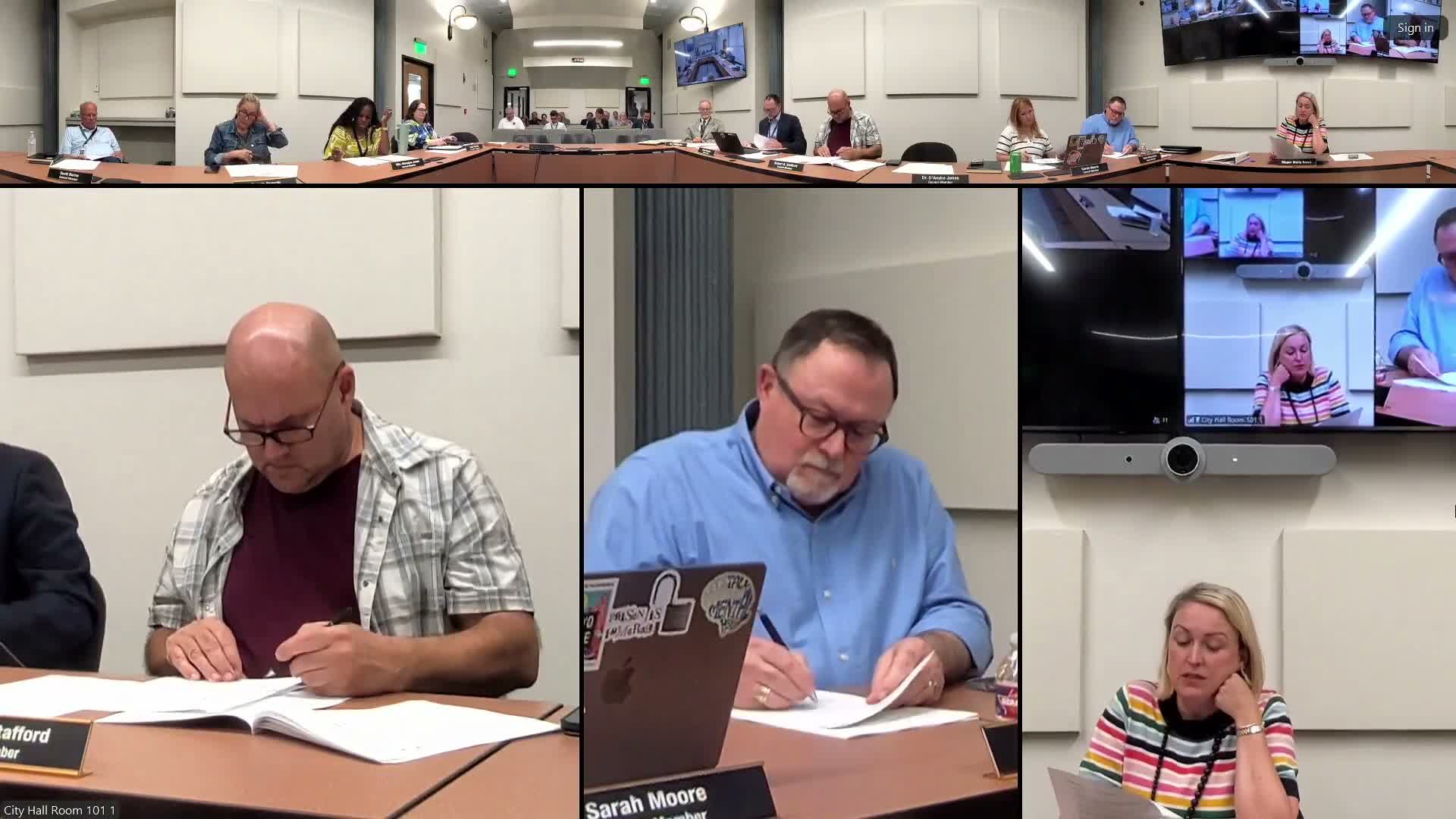
A proposed ordinance to establish a City of Fayetteville Renters Council drew questions at the Aug. 20 agenda session as councilors and staff debated who should sit on the nine-member advisory body and how the panel should be structured.
A drafter of the amendment told the agenda session she had drafted language adding three landlord seats to the nine-member committee and said Council Member Jones agreed to submit the amendment for the council meeting. The amendment is currently scheduled for consideration at next week’s council meeting.
Council members expressed differing views on whether landlord representation is appropriate. One council member said some residents want the body to be “fully a renter’s council” to reflect that roughly 60% of the city’s housing stock are renter households; others urged mixed membership to provide balance. Several members emphasized that the nominating committee process should be used to screen appointees rather than embedding highly prescriptive appointment mechanics in the ordinance.
Staff repeatedly cautioned against embedding operationally prescriptive language in the ordinance. City staff said making fixed assignments—such as naming a specific staff person or mandating meeting dates and frequencies in code—could create administrative difficulties if personnel or schedules change and could force future ordinance amendments for routine staffing changes.
Speakers discussed several procedural safeguards: using the city code’s advisory-committee purpose and duties (referenced as code language for guidance), requiring appointments to come through the nominating committee, and leaving day-to-day organization (chair selection, meeting cadence) to the committee at its first meeting. A council member also asked that any ordinance language clarify staffing resources and pathways to establish a committee chair.
Next steps: the drafter’s amendment will be reflected in the posted agenda prior to the council meeting, and councilors indicated amendments may still be offered on the council meeting floor as allowed by standard procedure.