Get Full Government Meeting Transcripts, Videos, & Alerts Forever!
Get email alerts on the Housing Policy topic
No spam. Unsubscribe anytime.
City housing staff previews refreshed CDBG plan and 2026–2030 consolidated-plan schedule
Summary
The housing and community services director described the Community Development Block Grant (CDBG) as the department’s largest revenue source, outlined eligible activities and HUD national objectives, and said staff will draft a new consolidated plan for 2026–2030 and return in March with an updated annual housing assessment and housing roadmap.
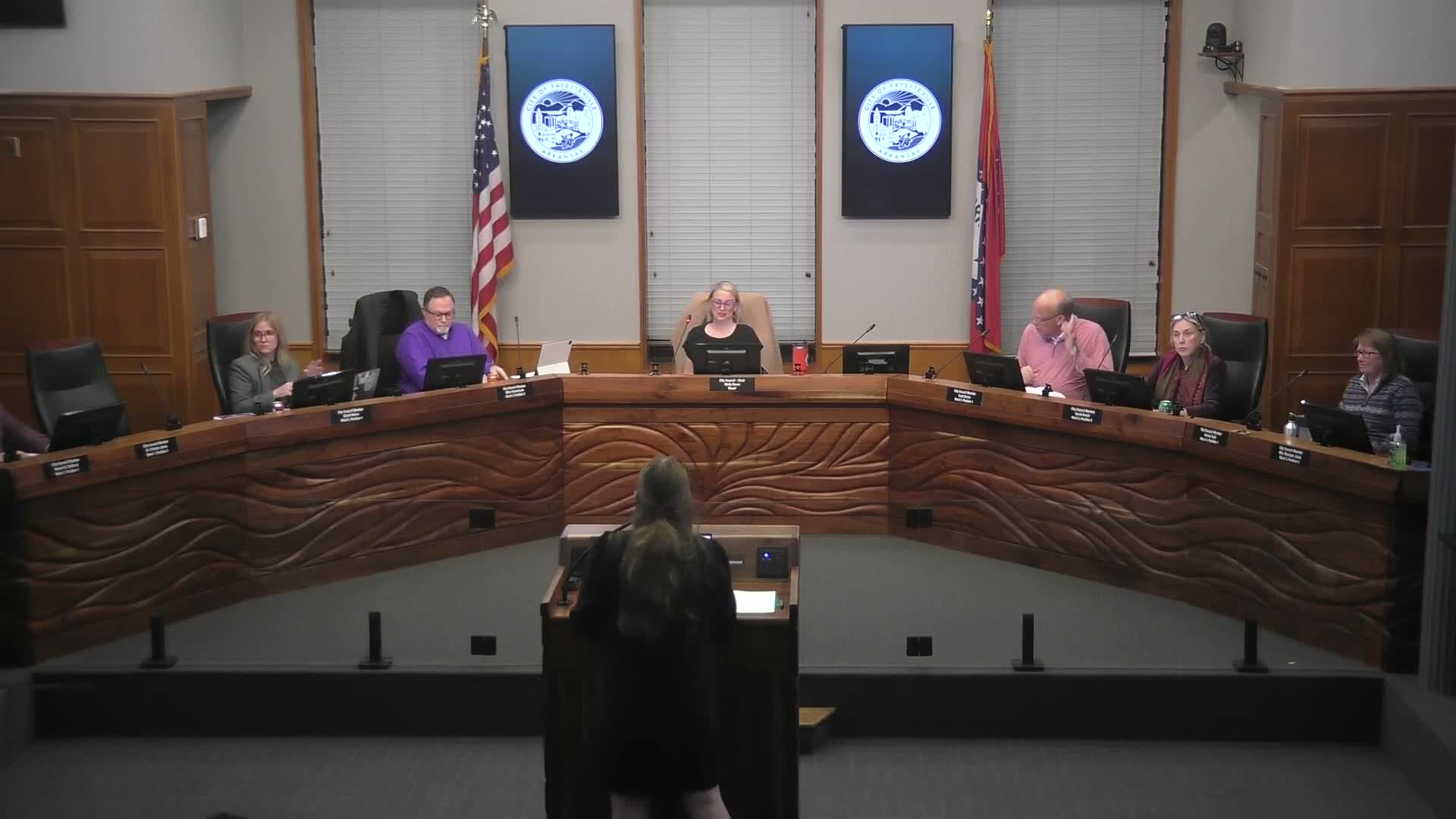
Marley, the city’s chief housing officer, told the council on Jan. 13 that the Community Development Block Grant (CDBG) funds more than half of the housing department’s revenues and must meet HUD national objectives such as benefiting low‑ and moderate‑income households or eliminating blight.
Marley emphasized that roughly 70% of CDBG expenditures must benefit households at or below 80% of area median income and that new construction and long‑term rental assistance are generally not eligible under typical CDBG rules. She outlined common CDBG activities (owner‑occupied rehab, homeownership assistance, public services, and occasional public‑facilities investments) and pointed to historical uses in Fayetteville such as sidewalk investments and land acquisition for community facilities.
Staff previewed an upcoming consolidated plan for 2026–2030 that will require a housing‑and‑homeless needs assessment and a housing‑market analysis; Marley said the city will supplement HUD data with local analysis and link the consolidated plan with a new housing roadmap and the annual housing assessment. The consolidated‑plan timeline depends on the federal appropriations bill and HUD’s funding estimate; staff expect to return in March with draft materials and a refreshed citizen‑participation plan. Marley also noted the city has not updated its CDBG target‑area map since 1992 and plans to revisit that boundary as part of the planning work.
Council members and staff discussed coordination of CDBG with other federal tools and the timing differences between the city’s fiscal year (calendar year) and the federal fiscal year (Oct.–Sept.). Marley said the consolidated plan and housing‑roadmap work will help align multiple funding sources, including CDBG, HOME and the CIP, to pursue strategic neighborhood investments.
Staff will bring drafts for public comment later in the spring and will return for council review once HUD provides a funding estimate.