Get Full Government Meeting Transcripts, Videos, & Alerts Forever!
Get email alerts on the Council Rules topic
No spam. Unsubscribe anytime.
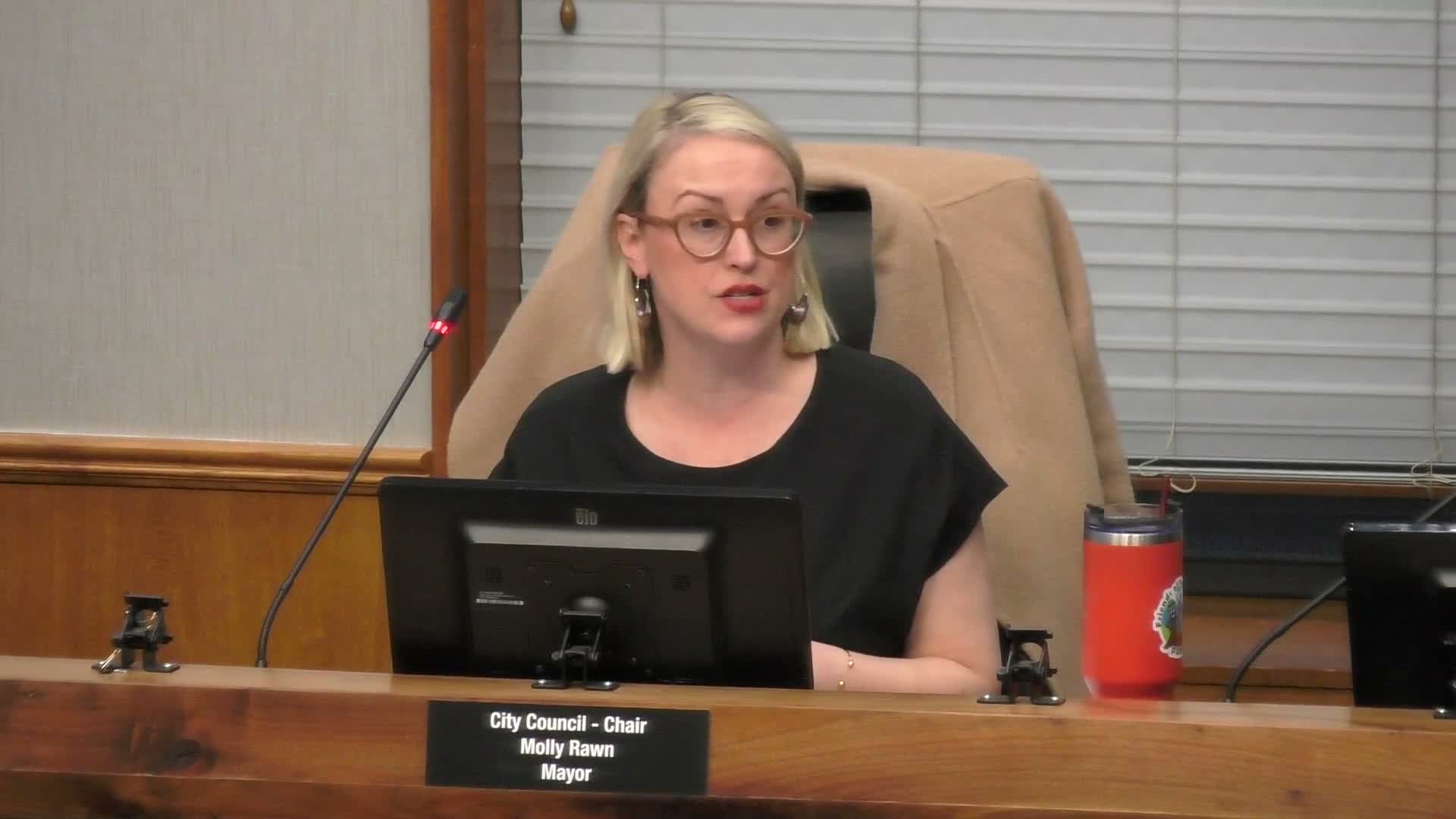
Fayetteville council debates tighter rules of order, limits on agenda additions
Summary
Council members weighed staff-proposed rule changes that would impose a 15-minute cap on clarifying questions, require three members at agenda session to move items off consent, and remove committee rules from the order-of-business document; council split over meeting efficiency, member orientation and equitable access to questions.
The Fayetteville City Council on Jan. 13 debated proposed revisions to its rules of order aimed at shortening meetings and clarifying agenda procedures.
Staff presented a package of changes the council is required to adopt annually under an Arkansas attorney-general interpretation. Key proposals include a time limit on clarifying questions before public comment (15 minutes total), a 2‑minute post‑public‑comment remark period, and a new agenda‑session rule that would require three council members to support moving an item from the consent agenda to new business during agenda session (a single member could still move it at a regular meeting). Staff also proposed removing sections about committees and internal boards from the rules of order and placing those procedures in a separate document.
The changes reflect staff and mayoral aims to make meetings more efficient and reduce last‑minute materials that complicate packet preparation. "There has to be a cutoff somewhere," the city’s administration said, noting the workload required to compile agenda packets and archive public comment.
Council members were split. Supporters said clearer limits would help shorten late meetings and be kinder to staff and residents who cannot attend long evening sessions. "If we gave it a try and find that it does not work, we can change it," one council member said in favor of a trial.
Others warned the limits risked curtailing substantive questioning and public participation. One council member said they had received little formal orientation upon taking office and argued orientation should remain explicitly addressed so new members are not "dropped in a seat" without guidance. Another voiced concern that a 15‑minute total for clarifying questions could let three members use up the time and leave others without the opportunity to ask important, germane questions.
Council members also debated the operational effect of removing committee rules from the document: staff and legal advisers said removing the language would not eliminate committees, but would move their governance into separate, more flexible guidance.
The mayor encouraged members to think about the purpose of agenda sessions versus regular meetings and asked them to send suggested rule changes to the city attorney's office for drafting. The city attorney said staff would draft any requested language for future consideration.
The council did not adopt the changes during the agenda session; discussion will continue at the meeting where the rules must be adopted later this month to comply with the attorney-general's timeline.