Get Full Government Meeting Transcripts, Videos, & Alerts Forever!
Get email alerts on the Municipal Bonds topic
No spam. Unsubscribe anytime.
Fayetteville Council sets March 3, 2026 special election for $376M+ bond package using existing 1% sales tax
Summary
On Oct. 21 the council voted to call a March 3, 2026 special election asking voters to authorize refunding bonds and nine capital questions totaling a multi-hundred-million-dollar package, secured by the city's existing 1% special sales-and-use tax ("not a new tax").
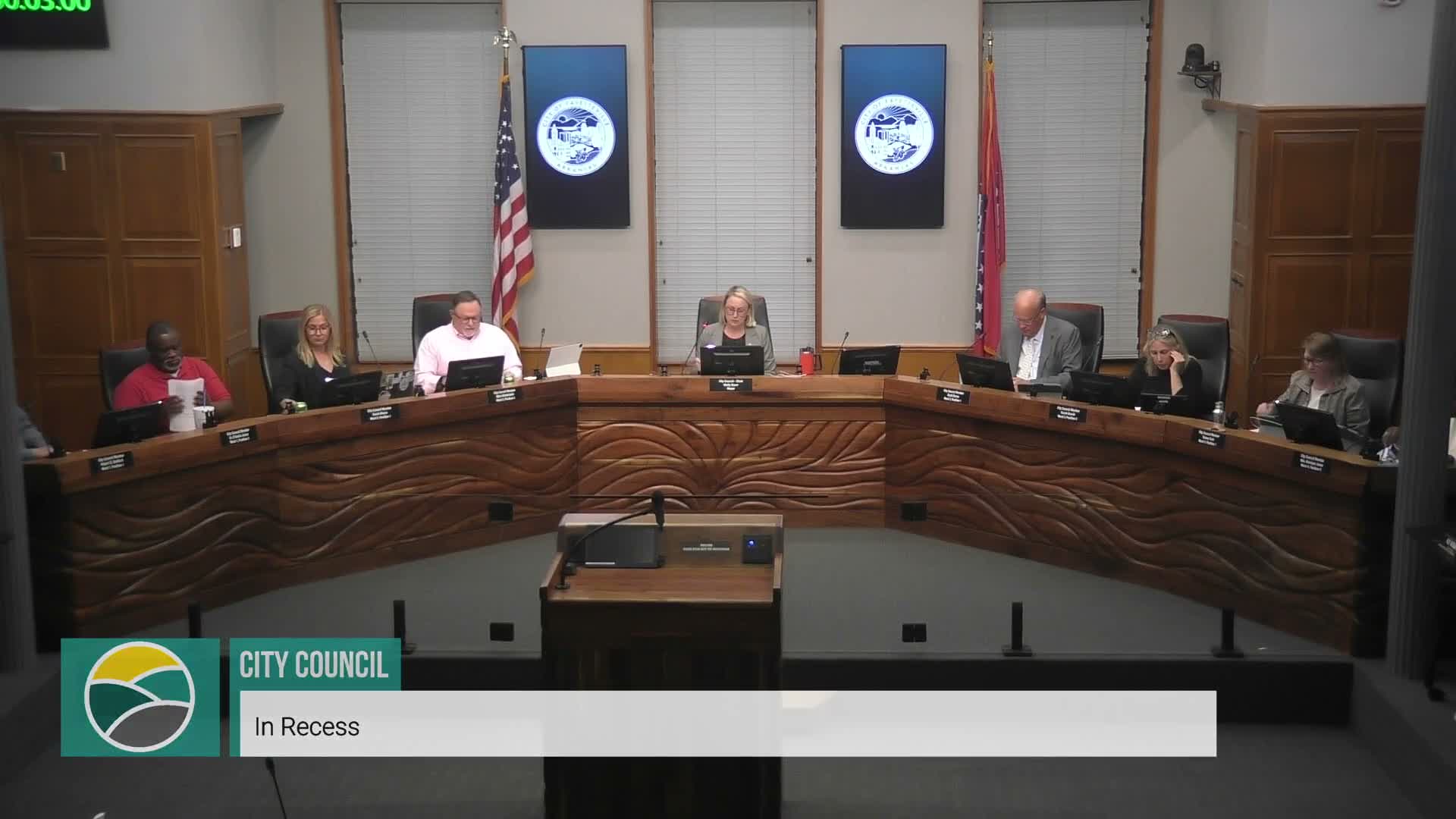
The Fayetteville City Council voted Oct. 21 to call a special election on March 3, 2026 that would ask voters to continue the city's existing 1% special sales-and-use tax as a bond tax and authorize a package of refunding and capital-improvement bonds.
City CFO Steven Dodson told the council the first ballot question would authorize refunding bonds of up to $40 million and stressed, "This is not a new tax." The ballot then lists a series of capital questions that would be secured by the bond tax if Question 1 and at least one other question pass.
Key questions on the ballot as described to the council include: - Refunding bonds: up to $40,000,000 to refund prior bond series. - Water and wastewater system bonds: up to $150,500,000 (Nolan wastewater treatment plant upgrades and other critical water system repairs). - Park system bonds: up to $25,500,000 for parks maintenance, new parks and athletic fields. - Animal services facility: up to $18,100,000 for a new animal shelter and associated facilities. - Trail system bonds: up to $3,800,000 to extend and repair the trail network. - Transportation system bonds: up to $56,000,000 for street, intersection and mobility improvements. - Sustainability bonds: up to $1,050,000 for a West-side recycling drop-off and a permanent household hazardous waste facility. - Aquatics and recreation center bonds: up to $61,900,000 to construct a new aquatics/recreation center. - Fire department and training facility bonds: up to $18,650,000 for a training facility, a fire station and replacement apparatus.
Staff outlined programmatic priorities for each question. Tim (staff leading water/wastewater) said the Nolan master plan identified roughly "$126,000,000 in critical infrastructure improvements" and described a two-phase approach focused on near-term reliability and later capacity expansion. Parks and transportation staff described uses that include field and playground replacement, trail replacements and corridor and signal improvements designed to leverage federal grants.
Speakers from the community — including representatives of the Fayetteville Housing Authority — urged council support, saying the package addresses critical infrastructure and can indirectly support housing and economic development. Duke McLarty and Kyle Smith both urged the council to place the questions before voters.
Council debate touched on trade-offs: several members emphasized the urgency of water/wastewater and transportation needs and supported placing the full package before voters; others expressed concern about the aquatics center's cost and potential ongoing operations expenses and urged staff to address operating-cost questions and equitable access if voters approve the facility.
Council voted to suspend the rules and take the ordinance to its third reading, and on final roll-call approved the ordinance to call the special election. The final vote recorded 'Yes' from Councilmembers Stafford, Doctor Jones, Weidecker, Burna and Bunch; 'No' votes were recorded from Minister Jones and Miss Moore. The ordinance passed, setting the election for March 3, 2026.
If approved by voters, the bond tax would replace the prior 1% sales-and-use tax as a bond tax and collections would fund only the bond questions authorized by voters and the debt service for those bonds. Staff said any projects funded by the bond would be eligible to leverage matching grant funds and that publication, election notice and coordination with county election officials will follow state timelines.