Get Full Government Meeting Transcripts, Videos, & Alerts Forever!
Get email alerts on the Housing topic
No spam. Unsubscribe anytime.
Council advances new short‑term‑rental rules but emergency measure falls short
Summary
Fayetteville staff presented a repeal‑and‑replace short‑term‑rental ordinance that would remove the sunset clause, limit concentration of Type‑2 rentals, align occupancy with other housing and strengthen enforcement. Council voted for the ordinance but failed to secure the unanimous emergency clause needed for immediate effect; members voted to reconsider and table the item to Dec. 16.
After years of iterative changes, city planning staff proposed a comprehensive repeal‑and‑replace of Fayetteville’s short‑term‑rental (STR) rules to remove an expiring sunset clause, refine enforcement and limit concentration of Type‑2 rentals (properties used primarily as STRs).
Jonathan (planning staff) summarized the package: maintain the existing cap of 475 Type‑2 STRs overall, require planning‑commission conditional‑use permits where STRs are allowed in residential and some mixed‑use districts, tighten enforcement by lengthening service terminations for repeat offenders and make three violations in 12 months a two‑year disqualifier for new or renewed licenses, and remove the “extra occupancy” allowance so STR occupancy matches other housing rules. The staff package also proposes two concentration safeguards: no new Type‑2 STR in a single‑family dwelling within 100 feet of an existing Type‑2 STR, and a 4% cap on the share of single‑family dwellings that may be Type‑2 STRs within a 500‑foot radius.
Supporters of stricter rules said the measures balance operators’ rights with neighborhood livability. Speakers in the public record praised the ordinance as needed to protect housing stock and neighbor quality of life. Councilmembers praised the ordinance’s analytical approach to the concentration metric and the stepped enforcement approach designed to deter repeat violators.
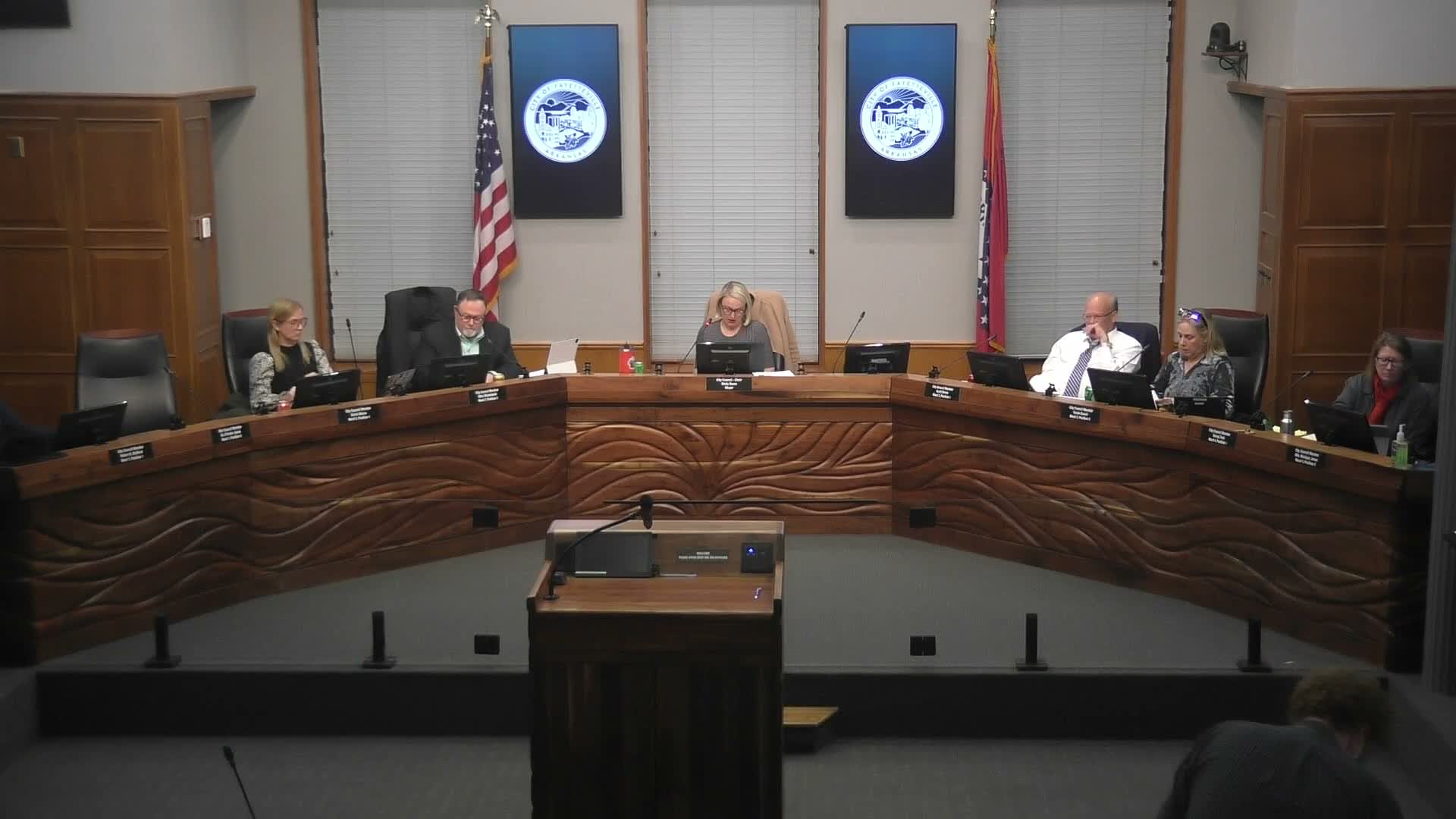
At the vote, council approved the ordinance language but failed to pass the accompanying emergency clause, which would have made the ordinance effective immediately. The city attorney explained the emergency clause requires six affirmative votes; only five were recorded. Because staff’s current STR regulations are scheduled to expire Dec. 30, the council voted to reconsider and table the ordinance to the Dec. 16 meeting to give the full council an opportunity to return with the quorum needed to act on the emergency clause.
What changed and what’s next: The proposal replaces the sunset approach with a permanent code, strengthens penalties for serial violators (service shut‑offs up to six months and a two‑year bar after repeated violations), removes bonus guest allowances, and introduces a data‑driven concentration cap (4% within 500 feet). Staff will return Dec. 16 for reconsideration of the ordinance and the emergency clause. Until that action, the existing temporary rules remain in place through Dec. 30.