
GreeleySchool District No. 6 reports 90.1% on-time graduation in Innovation 2030 update
Get AI-powered insights, summaries, and transcripts
Subscribe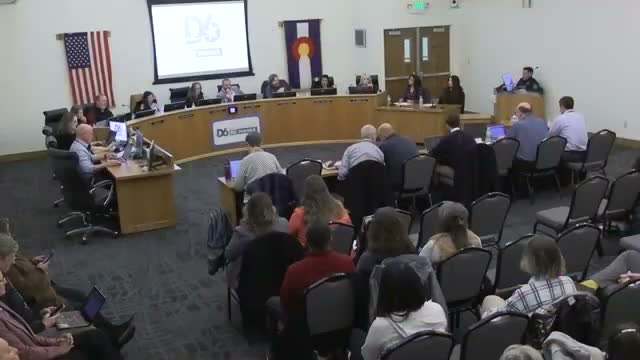
Summary
Assistant Superintendent Anthony Asmus told the school board on Jan. 26 that District 6 achieved a 90.1% on-time graduation rate, exceeding the state average, and outlined equity-focused gains for multiple student groups and next steps for freshman support and literacy initiatives.
GREELEY, Colo. — Assistant Superintendent Anthony Asmus told the GreeleySchool District No. 6 Board of Education on Jan. 26 that the district’s on-time graduation rate reached 90.1% for the most recent year, above the state average of 85.6%.
Asmus framed the result as the product of multiple district strategies under the Innovation 2030 initiative, citing expanded AP participation, growing concurrent-enrollment access and targeted supports. “As a result, we’re very proud to announce a 90.1 graduation rate,” he said.
The presentation included disaggregated data. Economically disadvantaged students — who make up 69% of the student body — graduated on time at 88.7% compared with a state average of about 80.3% for that group, Asmus said. Students with disabilities were 83.9% on time (state 75.7%); English learners were 84.7% (state 73.2%); Hispanic/Latino students were 89.4% (state 81.2%); and the district’s overall dropout rate was reported at 1.2%, its lowest level, compared with the state’s 1.6%.
Board members and high-school principals credited several concrete strategies for the gains: increased dual-enrollment and career-academy participation, stronger counselor interventions and a cohort-based casework process used roughly every six weeks to locate and reengage students. Principal Erin Allen described a local dual-enrollment bridge that places students part-time at alternative sites to accelerate credit recovery.
Several presenters and board members highlighted the role of local funding. “We’re seeing the impact of the Mill Levy Override,” Director Edmonds said, noting the district achieves competitive results despite lower per-student revenue in some neighboring districts.
Asmus also reported operational results: more than 1,200 students enrolled in college coursework at no cost to the student; industry certificates rose from 93 to 250 year over year; and the district is tracking a literacy-achievement initiative and additional freshman supports intended to reduce freshman failure rates to 10% or less.
The board did not take any formal action on these presentation items but asked staff to continue monthly data reviews and to return with implementation plans for the freshman-support and literacy work.
What’s next: Asmus said the graduate-initiative team will continue to meet monthly and refine the freshman supports and transition work from middle to high school.