Lifetime Citizen Portal Access — AI Briefings, Alerts & Unlimited Follows
Tax Foundation tells N.M. panel: chronic underfunding requires principled revenue reforms, considers VMT tax
Loading...
Summary
Tax Foundation analyst Jacob Macumber Rosen briefed the committee on New Mexico’s recurring funding shortfalls, citing $327 million/year in average nonrecurring transfers and $5.6 billion in needed projects; he outlined pros and cons of fuel taxes, EV fees, registration changes and a weight‑differentiated vehicle‑miles‑traveled (VMT) tax, and warned against delivery surcharges.
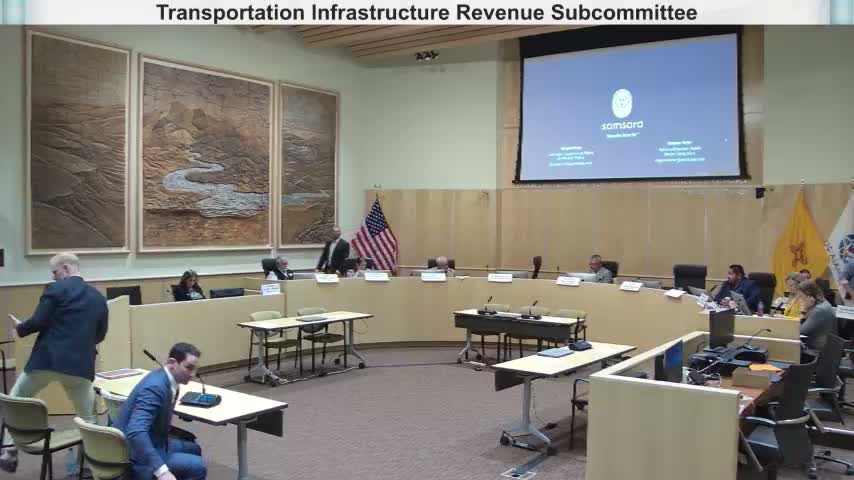
Jacob Macumber Rosen, an excise tax policy analyst with the Tax Foundation, told the subcommittee that New Mexico’s transportation system faces structural revenue problems that have led to repeated one‑time infusions of general‑fund money.
Rosen said NMDOT has received an average of $327,000,000 per year in nonrecurring appropriations over the past seven years and that the department estimates about $5,600,000,000 in needed but unfunded projects. He pointed to three systemic drivers: (1) fuel taxes are a declining proxy for road use as vehicles become more fuel efficient and electric vehicles proliferate, (2) many fuel and weight‑based rates have not been adjusted for inflation (the state’s gas tax was last changed in 1995), and (3) existing revenue flows run through the general fund rather than being dedicated, making long‑term DOT planning harder.
As alternatives Rosen discussed registration surcharges, additional EV registration fees, increased fuel taxes adjusted for CPI, and a broadly applied vehicle‑miles‑traveled (VMT) tax that is weight‑differentiated to capture heavier vehicles’ greater road wear. He summarized technical and distributional tradeoffs: VMT better aligns user payments with road use and is more neutral across vehicle fuel types, but administration and privacy concerns must be addressed with reporting options and third‑party account managers. Rosen estimated that an average passenger VMT rate of about 1.565¢ per mile could, in modeling terms, be a plausible route to funding needs cited during the hearing.
Rosen warned that retail delivery fees are among the least desirable tools—regressive, administratively complex and of limited base size—and recommended careful consideration of weight‑differentiated VMT as a principled long‑run option. Lawmakers asked technical follow‑ups about implementation, privacy protections and whether any states currently index gas taxes to inflation; Rosen offered to follow up with data and comparative examples.
The hearing concluded after the presentation and a question period; no legislative action or votes occurred during the meeting.