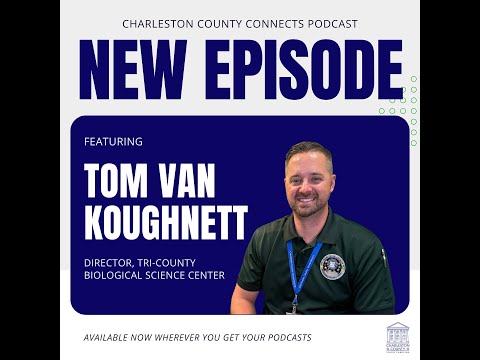
Tri County Biological Science Center opening in January to speed DNA testing and reduce multi-year backlogs
Loading...
Summary
The Tri County Biological Science Center, funded by Charleston, Dorchester and Berkeley counties, will open in late January to expedite forensic DNA testing—aiming for a 60–90 day turnaround versus current waits of three to five years—and plans initial capacity of roughly 500–600 DNA requests a year.
The Tri County Biological Science Center, a new regional forensic laboratory backed by Charleston, Dorchester and Berkeley counties, is scheduled to open in late January and aims to sharply reduce forensic DNA testing delays that can stall criminal cases.
Thomas Vonconet, director of the laboratory, said the center’s principal purpose is to “expedite the process for the testing,” targeting a 60-to-90-day turnaround for results. He told the Charleston County Connects podcast that some jurisdictions currently wait “three to five years” for DNA results, a delay the new facility is intended to address.
The lab will accept submissions from regional agencies but agencies may choose where to send samples; Vonconet said triage will be based on incident date and crime class, with homicides taking precedence. “Crime class and incident date are really what we look at,” he said. He added the center hopes agencies will use the regional facility when possible.
Vonconet outlined the basic DNA workflow: extract DNA and purify it from a sample, quantify how much DNA is present, amplify the DNA to produce sufficient material for analysis, and then measure DNA fragments to generate a profile. “Once we have all of that…and we have a kind of consistent match, we’re able to do statistics to kind of estimate how rare or common that profile is in the general population,” he said.
Initial capacity on the DNA side is projected at about 500–600 requests per year. Vonconet described staffing math used to set those expectations: a DNA analyst typically handles roughly 100 cases per year, so “if you get 600 requests, you need about 6 people.” The lab is designed to scale up if it receives more submissions.
The project has been in planning for many years—Vonconet said it began nearly 20 years ago and was restarted in the past three to five years—and construction and validation remain. The center’s launch will be followed by a two-year phase the director called “validation and accreditation.” The first year will involve running varied sample types and writing policies; the second year will focus on accreditation and training. Vonconet noted that access to the Combined DNA Index System (CODIS) cannot be requested until the lab is accredited, and that CODIS installation typically takes about six to nine months after accreditation is granted.
Vonconet said the lab intends to be “full service,” handling a broad range of case types from auto thefts to serious crimes such as sexual assault and homicide and even bone extractions when needed. He emphasized the role of the science in ensuring fairness: DNA testing can both implicate and exonerate suspects and the lab will strive to remove bias from analyses.
Funding for the project came from the three counties, which Vonconet and the host thanked on the podcast. The center will continue validation and accreditation work after the ceremonial ribbon cutting as it scales toward full casework and CODIS integration.