Get Full Government Meeting Transcripts, Videos, & Alerts Forever!
Get email alerts on the Scooter Ordinance topic
No spam. Unsubscribe anytime.
Fayetteville committee moves to start ordinance update to treat e‑scooters like bicycles in crosswalks
Summary
After a recent e‑scooter collision, the Fayetteville Active Transportation Advisory Committee moved to begin drafting an ordinance aligning e‑scooter rights in crosswalks with those of bicyclists; staff said the change would need City Council review and the transcript records no formal roll‑call vote.
Fayetteville — The Active Transportation Advisory Committee voted informally to begin drafting an ordinance that would treat e‑scooters the same as bicycles when using crosswalks, after members discussed a recent crash and legal inconsistencies.
Chair David Criswell, service chair, moved that the committee "start the process to create an ordinance" so e‑scooters "would have the same rights as bicycles in crosswalks," and the motion was seconded during the meeting. The transcript records the motion and a second but does not include a formal roll‑call vote.
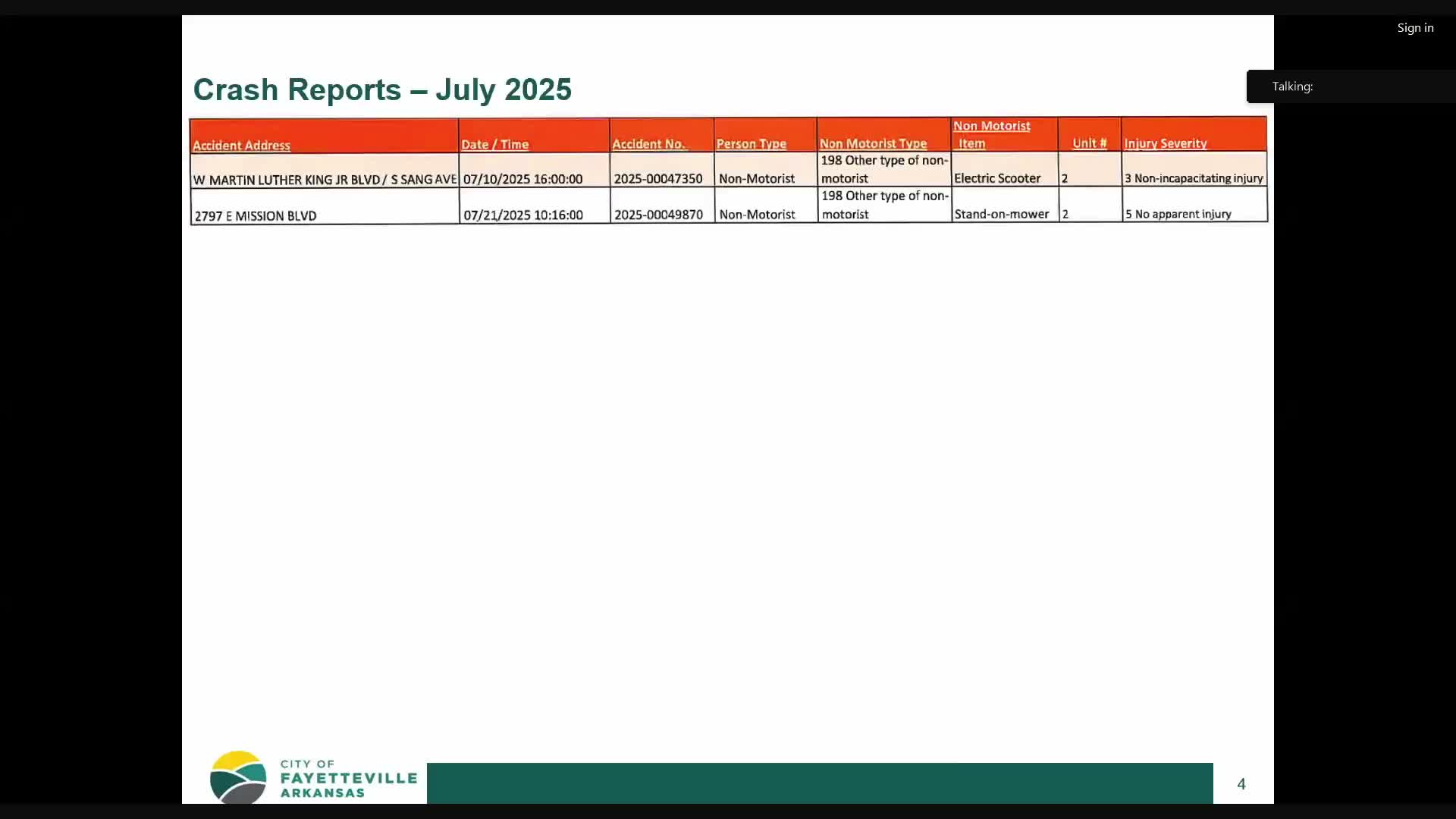
The discussion followed an incident Captain Miller described in which a motorist collided with a rider on an e‑scooter at the Martin Luther King intersection. "The subject on the scooter got up and went off on his scooter," Miller said, and officers attributed contributing factors to both parties during their investigation. Miller noted the city ordinance currently requires e‑scooter riders to dismount to receive pedestrian protections.
Staff identified the cause of the inconsistency. "When we originally drafted the e‑scooter ordinance ... we wanted e‑scooters to be legally treated pretty much the same as bicyclists, but we did not update the scooter ordinance to reflect that" after the state law changed, Dana said. She told the committee an ordinance change would go to the City Council and typically requires multiple readings.
Committee members framed the proposed change as aligning local rules with current state law and reducing confusion for enforcement. Several members urged that staff or a council member initiate the ordinance so the city would clarify whether e‑scooter riders must dismount or are protected as vulnerable road users in crosswalks.
Next steps described in the meeting: staff or a council member would formally initiate the ordinance change and the proposal would follow the city’s standard council process; the committee did not record a final vote in the transcript. The committee’s motion initiation was captured beginning in the discussion at SEG 145–179.
No public comment in the transcript formally opposed the motion; the committee will refer the draft ordinance to City Council for review.