Lifetime Citizen Portal Access — AI Briefings, Alerts & Unlimited Follows
Lawmakers review alcohol tax options to fund treatment and prevention; debate effectiveness and tribal, local impacts
Loading...
Summary
Sen. Zedillo Lopez and Rep. Christina Parajon presented a historical review of New Mexico's alcohol excise tax (unchanged since 1994) and policy options—raising wholesale excise, adding a point-of-sale sales tax, indexing rates to inflation and creating dedicated treatment funds—that lawmakers debated for efficacy and distribution to rural and tribal communities.
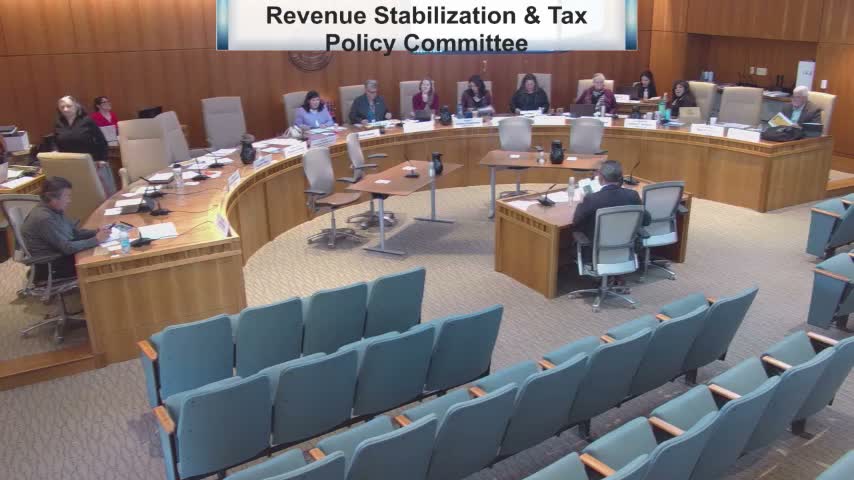
Senator Zedillo Lopez and Representative Christina Parajon briefed the Revenue Stabilization & Tax Policy committee on three years of work examining New Mexico's alcohol tax structure and policy proposals to fund treatment and prevention.
Representative Christina Parajon, who said her legislative district and casework motivated her, walked members through how the statute currently taxes alcohol at the wholesale/distributor level (for example, $0.45 per bottle of wine, $0.41 per gallon of beer and $1.60 per liter of spirits under the existing statute) and explained that when divided into servings those rates amount to only a few cents per drink. Senator Zedillo Lopez said the rates have not changed since 1994 and that the flat excise has eroded with inflation: "We haven't changed the tax rate ... since 1994," she told the committee.
Presenters described options considered by prior bills: substantial wholesale increases (including a divided per-serving increase that was shown to reduce consumption when previously proposed), a new point-of-sale sales tax (a Maryland-style 3% example that studies tied to reductions in youth consumption and a modest reduction in alcohol-related crashes), indexing excises to inflation, and creating targeted funds for alcohol-harm alleviation with an explicit distribution formula. They said the existing excise brings in about $50 million annually and that historically half has gone to the general fund, 45% to a local DWI grant fund and 5% to a drug court fund.
Lawmakers raised concerns during the discussion. Rural and tribal representatives repeatedly warned that local dynamics differ: some counties already levy local excises, and bootleg or low-cost products, cross-border sales and tribal tax sovereignty may blunt price effects. Senator Munoz and Representative Lundstrom both recounted McKinley and San Juan County experience that local excises did not noticeably change consumption and emphasized that treatment capacity and continuity matter: without upstream and downstream services, detox centers alone do not address chronic addiction. Several members urged that any new revenue be dedicated to behavioral-health services rather than the general fund.
Presenters described legislative compromises in recent sessions: some bills proposed modest wholesale increases and the creation of two new funds (an Alcohol Harm Alleviation Fund and a Tribal Alcohol Harms Fund) intended to redistribute revenue to counties and tribes based on updated measures such as alcohol-related deaths and population rather than outdated retail-GRT formulas.
The committee did not vote on any bill. Presenters and lawmakers agreed further data, stakeholder engagement (including with tribal governments and small businesses), and careful distribution rules are needed before advancing statutory changes.
Next steps: Sponsors said they will continue outreach and present revised distribution formulas and fiscal estimates in the next legislative session.