Get Full Government Meeting Transcripts, Videos, & Alerts Forever!
Get email alerts on the Subdivision Approval topic
No spam. Unsubscribe anytime.
Saddle Ridge subdivision continued as county and applicant debate fire access and road improvements
Summary
The commission continued Saddle Ridge (now 22 lots) for up to 90 days after staff, applicants and the county engineer disagreed about whether existing roads meet standards and whether exceptions to the International Fire Code apply; developers said they have water-rights agreements and are willing to pay for proportional improvements.
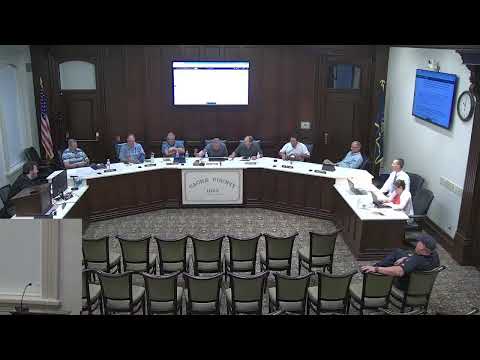
The Cache County Planning Commission on Sept. 4 voted to continue consideration of the Saddle Ridge subdivision for up to 90 days to allow county staff, public works and the applicant to resolve outstanding road‑access and fire‑safety issues.
Staff summarized a lengthy report describing the application’s history, previously identified deficiencies (lack of secondary ingress/egress and traffic and safety concerns), and recent application revisions. The developer presented revised materials, added one lot (from 21 to 22) and provided a purchase agreement for 10 acre‑feet of water rights (bringing available water rights from 13 to 23 acre‑feet, according to staff).
Attorney Chris Hogel and applicant Christopher Huffman said the applicant has submitted a traffic impact study (May 9) and other technical materials and argued the International Fire Code exceptions could apply if dwellings include sprinklers and future development provides a connecting second access. County engineer and public‑works staff said the existing approach road is substandard in length and alignment and that unresolved dedications and prescriptive easements make realignment or widening difficult. The public‑works director emphasized the county must identify who pays for the large proportion of off‑site improvements the development triggers.
Commissioners pressed both sides for clearer commitments; some asked that on‑site water storage or community cisterns be considered to support residential sprinklers in a power outage. Following discussion, the commission continued the item up to 90 days so engineers and attorneys can produce firmer conclusions and conditions.
What happens next: staff and applicant will refine conditions addressing water rights, traffic/road improvements, secondary egress requirements and final plat dependencies (Nautica subdivision amendments, road vacations/dedications required by county council). The commission asked for explicit documentation on what off‑site upgrades the subdivision must fund and how costs will be apportioned.