Get Full Government Meeting Transcripts, Videos, & Alerts Forever!
Get email alerts on the Land Use Access Dispute topic
No spam. Unsubscribe anytime.
Cache County continues Nixon CUP revocation hearing, urges parties to negotiate access agreement
Summary
After multi-hour testimony about decades of permits and access agreements, the Cache County Planning Commission voted to continue the Nixon conditional-use-permit revocation matter for up to 90 days to allow county staff and Nixon to negotiate a written access agreement, indemnity or other remedy. Commissioners declined to revoke the permits at the meeting.
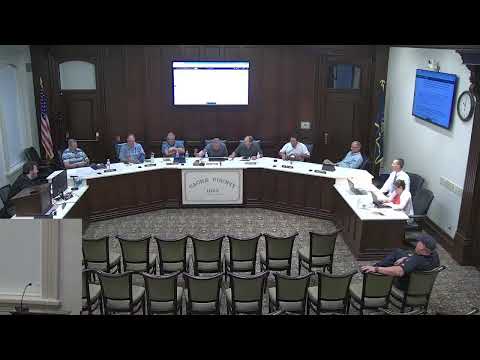
The Cache County Planning Commission on Sept. 4 did not revoke long-standing conditional-use permits for Nixon & Nixon but continued the county’s revocation hearing for up to 90 days, directing county attorneys and Nixon representatives to try to resolve disputed access to a gravel pit that has operated for decades.
The county’s civil attorney, Jairus Kendall, opened the hearing by tracing permit and contract history back to the 1980s. Kendall said a 1993 agreement between LaGrande Johnson and Cache County granted Johnson private access across county land to Parcel 49, and that Johnson — not Nixon — held the county’s permission to use that road until a 2022 property transfer. Kendall told commissioners that evidence shows Nixon has not had a written county agreement for access and that two CUPs (1984 and 2017) include conditions — notably a private road to Highway 91 — that the county says were never satisfied.
"If Nixon had built that road that they were required to under their 1984 CUP, we would not be here," Kendall said, summarizing the county’s view that the primary purpose of the earlier permit (a road and PUD) was never completed.
Nixon’s legal team disputed the county’s reading. Attorney Waymond Stoddard told the commission the 2017 CUP, staff findings and subsequent county actions created an expectation and a de facto right that the company relied on. “It is impossible for me to tell now how that does not constitute a writing,” Stoddard said, adding that Nixon has repaired and maintained the access and has operated the pit safely for years. Nixon’s counsel also argued that even if the commission revoked a CUP, state vesting law enacted in 2025 might preserve certain rights for an existing critical‑materials operator.
Several attorneys and company representatives described negotiation steps they have already proposed — including indemnity language, compensation, relocation of an easement on county property, and formal maintenance agreements — and urged the commission to allow time for a negotiated solution rather than immediate revocation. Nixon counsel warned that losing access could close a pit that the attorneys said generates substantial revenue and employs dozens of people.
Commission discussion ranged from technical legal points about assignment of the 1993 access agreement to practical concerns about safety, historic use, and county processes. After debate, a motion to deny the revocation did not carry. The commission then approved a motion to continue the matter for up to 90 days and strongly encouraged both sides to reach a written agreement for access, indemnity and required improvements or to present a new CUP if needed.
What happens next: county staff and Nixon’s representatives have 90 days to negotiate. The commission noted that the parties may return with a signed agreement that would make further action unnecessary; otherwise the revocation matter will be scheduled again for the commission to consider. The commission did not make findings that remove Nixon’s right to apply for a new permit; staff said revocation does not bar a new application.