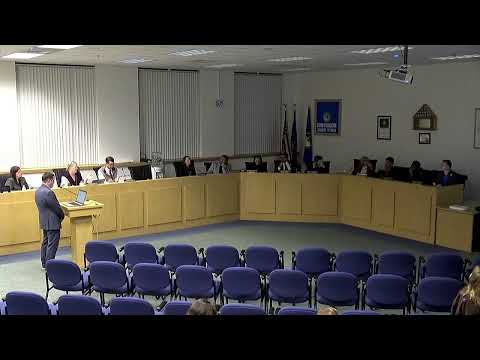
Board reviews Farmington Valley Diagnostic Center membership, transportation and special‑education costs
Loading...
Summary
Administrators told the board the district buys three memberships (about 543 days) at the Farmington Valley Diagnostic Center through CREC to provide short‑term diagnostic placements; presenters said the program stabilizes students and can be less expensive than out‑of‑district tuition, but transportation costs and comparative district spending remain important variables.
Southington administrators told the board their continued participation in the Farmington Valley Diagnostic Center cooperative provides a short‑term, lower‑cost diagnostic option compared with some out‑of‑district tuition. Mrs. Aresco described the cooperative model and said the district "purchases what they call seats in that program"; the packet shows three memberships equal to roughly 543 days of placement, spread over multiple students and used for short stays to evaluate interventions and program fit.
Administration framed the diagnostic center as a valuable tool: "The value add...we spend for 3 seats, gives us way more than an out of district tuition, and it gives us the opportunity to stabilize a student...and then hopefully make decisions," Mrs. Aresco said. Board members pressed for full cost accounting, including transportation: "Is it costing us $200,000 to get our students to participate in this cooperative?" Mr. Carson asked. Presenters said transportation is billed only for days used, can be shared among sending districts, and lower‑cost providers are sometimes available, but very complex daily transports to specialized out‑of‑district placements remain the largest transportation expense.
Separately the administration explained special‑education staffing rationale and noted that adding FTEs can sometimes reduce out‑of‑district tuition by allowing more services to be provided in district. Board members asked administration to pull comparative per‑pupil special‑education spending from similar towns to allow better apples‑to‑apples analysis before final staffing decisions.
The board asked for a follow‑up report showing (1) exact diagnostic center tuition and transportation costs by year and (2) comparative special‑education per‑pupil spending for peer districts; administration agreed to provide historical tuition and transport data from FY20–25 and to link the diagnostic center annual report for board review.