Roseville Fire Department puts cyanide‑treatment kits into front‑line use
Loading...
Summary
Fire Chief Keith Jacobs told the council that Roseville purchased two cyanide‑treatment kits (noted cost: $52,500) and placed them on a command vehicle so crews can treat smoke‑inhalation victims in the field; kits have a two‑year shelf life and department says county partners will share resources when needed.
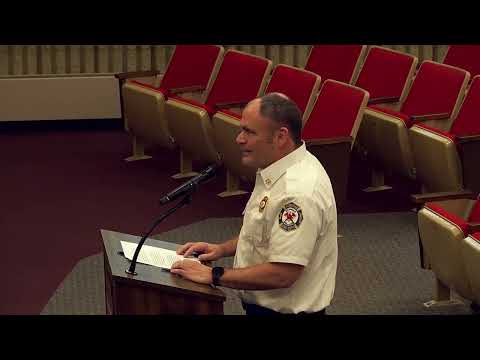
Roseville — The Roseville Fire Department has placed two cyanide‑treatment kits into frontline service to treat smoke‑inhalation victims in the field, Fire Chief Keith Jacobs told the City Council at its Jan. 27 meeting.
The kits (identified in the meeting transcript as variants of 'CynoKit' or 'CyanoQuit') were purchased through a revision to the department's EMS supply budget so they are available to deploy without an immediate expense to the city's general fund, Jacobs said. "It should also be noted that these kits cost $52,500," he said, describing that two kits were acquired and that each kit can treat either one adult or two children; with two kits the department can treat two adults, two adults and two children, or up to four children depending on need.
Why it matters: Chief Jacobs said cyanide is a common toxic combustion product when plastics burn and that rapid field treatment can prevent brain or heart damage. He said the kits chemically bind cyanide in the body so it can be excreted at a hospital, and that quicker administration improves survivability.
Jacobs told the council that the kits have a two‑year shelf life and will need replacement after expiration. He said the department has agreements with neighboring departments (Warren and Clinton Township) to share kits for large incidents; Roseville also agreed to keep its kits on a command‑level vehicle so they can be dispatched quickly across nearby scenes. Jacobs said the county adopted the protocol after local review and that county fire squads have recorded three documented saves since putting kits in service.
Training and operations: Jacobs said training will be provided for department paramedics; the only potential additional cost flagged in the meeting was possible overtime to provide that training. "We did this through changes in how we're ordering supplies and also taking less priority things, putting on to the next budget," Jacobs said.
What comes next: Jacobs said he plans a hands‑on demonstration for neighborhood watch groups to show how the equipment is used. The council did not take a formal vote on this item; the kit purchases were described as funded through the department's EMS budget adjustments.