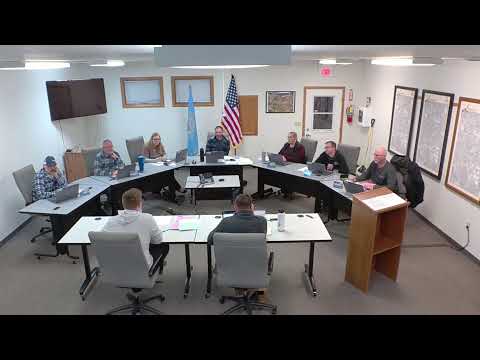
Lenox council authorizes consultant to study data center feasibility after industry expert's briefing
Loading...
Summary
Council voted to authorize the city administrator to select and negotiate with a consultant to study data center feasibility — including power, fiber and water needs — following an extensive public briefing and council questions about infrastructure, water use, and regulation.
Lenox City Council voted to authorize the city administrator to select and negotiate an agreement with a consultant to conduct a data center feasibility study, after hearing a lengthy public briefing and council questions about infrastructure and community impacts.
Scott Sandel, a local consultant and industry practitioner who identified himself and gave an extended presentation, told the council that modern data centers vary widely in size and resource needs and that the central issues for communities are size, location and resource stewardship. “The cloud came down like a heavy fog on communities,” Sandel said, arguing the physical footprint of data storage and AI workloads requires careful planning.
Council members and staff pressed on specifics: what the city’s water and wastewater systems could handle, whether local electrical capacity and fiber routes were adequate, and whether utilities or regulators (the Public Utilities Commission was cited) could prevent data center costs from being passed on to other customers. Staff said larger industrial users typically negotiate special rate or infrastructure agreements with utilities; county or state actions (Lincoln County was cited as considering a moratorium) also entered the discussion.
Staff recommended a scoped feasibility study to evaluate power, fiber, water, wastewater, zoning and potential buffers; one council member argued local consultants have a stake in the community and recommended local firms be considered. Sandel offered that Nebraska and areas around Sioux Falls have models for community–industry arrangements and stressed that success depends on available infrastructure and clear community standards.
Council member motioned to authorize the city administrator to select and negotiate a consultant agreement for the feasibility study; the motion was seconded and carried. Staff said the study will inform whether a specific zoning district or conditional-use permit is warranted, and that any rezoning would follow the planning and zoning and council processes.
The study will examine infrastructure capacity (substation/load, fiber routes), water and wastewater impacts, potential rate structures, and recommended zoning and conditions to protect neighbors and municipal services.