
Committee hears bill to let homeowners seek rebates when sale price is under 97% of county appraisal
Get AI-powered insights, summaries, and transcripts
Subscribe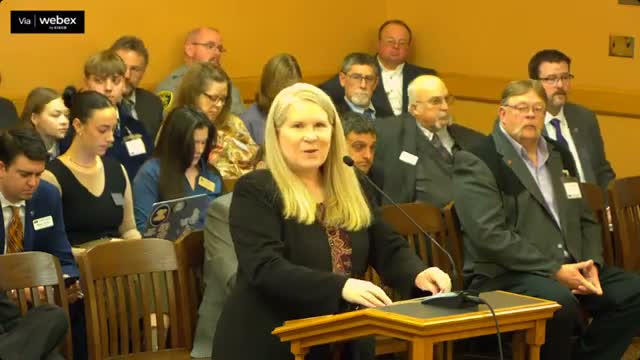
Summary
Senate Bill 319 would let owners of qualifying residential or commercial property who sell for less than 97% of county appraised value apply for a rebate equal to excess property tax paid for the sale year and up to four preceding years; opponents say the rebate shifts burden to remaining taxpayers.
Senate Assessment and Taxation Committee members heard testimony on Senate Bill 319 on Jan. 29, a proposal that would allow owners of qualifying property who sell in a qualifying sale for less than 97% of the county appraised value to apply for a rebate of excess property tax paid.
Amelia, the committee analyst, described the rebate mechanics: an owner who sold in a qualifying sale could apply to the county appraiser for a rebate equal to the excess tax levied compared with what would have been levied if the sale price had been the appraised value; rebates are limited to the year of the sale and the four preceding tax years and would be prorated for the year of sale if taxes were prorated. Applications could be appealed to the State Board of Tax Appeals, and rebates would be paid by county treasurers to applicants or, if taxes are delinquent, applied to outstanding taxes.
Senator Thompson, a proponent, described personal examples of apparent overvaluation and said the bill aims to hold appraisers and taxing authorities more accountable. "We've been basically, in my personal experience overpaying tax, what I believe to be overpaying tax," Thompson said. He told the committee the rebate was intended to provide a practical remedy for sellers who discover a sale price substantially below the county-appraised value.
Opposition testimony came from Jay Hall, deputy director and general counsel for the Kansas Association of Counties, who cautioned that if a property is over- or under-appraised the tax burden shifts to other taxpayers and the bill’s rebate approach would reimburse individual sellers while leaving the shifted burden with other taxpayers. "If a property is under or over appraised, that property tax burden shifts to other tax payers," Hall said.
Committee members raised technical and administrative questions: Senator Klump asked whether a property with mixed classification (for example, a farm with a residential farmstead) could qualify; staff said the residential portion could be eligible while ag land would not. Senator Corson and others asked whether research could estimate what percentage of sales would meet the 97% threshold; staff and conferees said existing ratio studies (which show many sales selling below appraised value) do not directly report that trigger and that research could be asked to analyze the question.
Other details: qualifying property is limited to residential, commercial and industrial subclasses; qualifying sale is defined as a fee-simple sale between unrelated, well-informed parties in an open market; applications would be limited to one rebate per property per tax year. The rebate provisions in the draft would take effect for qualifying sales on or after July 1, 2026.
What’s next: The hearing was closed after proponents, opponents and neutral conferees (including Martha Smith of the Kansas Manufactured Housing Association, who asked the committee to consider including personal property manufactured homes) testified. Committee members requested additional research on how many sales might qualify and administrative details.
Authorities referenced: committee staff referenced the State Board of Tax Appeals as the appeals venue and statutory definitions used in valuation practice; Jay Hall’s testimony emphasized county-level fiscal mechanics.