
Kansas Senate Committee backs constitutional amendment to cap assessed value growth, adds maintenance protection
Get AI-powered insights, summaries, and transcripts
Subscribe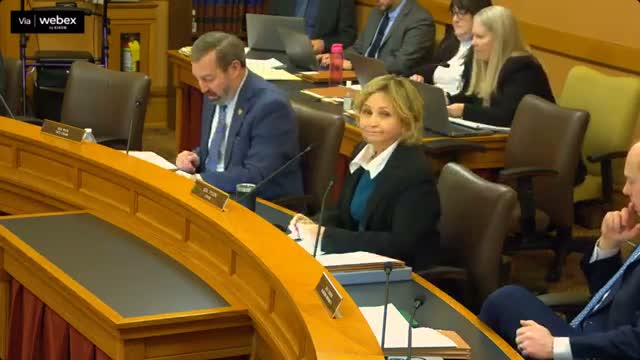
Summary
The Senate Assessment and Taxation Committee voted to pass SCR 16 as amended, a proposed constitutional amendment that would cap annual increases in final taxable assessed valuation at 3% and explicitly exclude normal maintenance from triggering reassessment. Senator Francisco recorded a 'no' vote.
The Senate Assessment and Taxation Committee voted to pass Senate Concurrent Resolution 16 as amended on Jan. 29, advancing a proposed constitutional amendment that would limit annual increases in final taxable assessed valuation to 3% and clarify that normal maintenance does not increase a property’s assessed value.
The committee’s amendment, adopted before the final vote, adds language to the amendment to expressly exclude routine repairs and upkeep — such as painting, new roofing, siding or window replacement — from being treated as improvements that would trigger reassessment. "Normal maintenance would not increase the valuation of your property," the committee chair said while explaining the change, adding the language mirrors existing statutory protections.
Amelia, the committee staff member who presented the measure, told the committee the resolution would amend Section 1 of Article 11 of the Kansas Constitution and would apply beginning on and after Jan. 1, 2027. She said the resolution limits increases in final taxable assessed valuation generally to no more than 3% compared to the prior year and lists exceptions where the limitation would not apply, including new construction or improvements. Amelia also cited existing statutory definitions in KSA 79-14-60 governing new construction and normal repair and maintenance.
Supporters described the measure as one part of a multi-pronged approach to address rising property tax burdens. Senator Thompson, a proponent during a related discussion, said homeowners sometimes see appraisals compared to much newer or higher-end comparables and argued the amendment helps hold appraisers and taxing authorities to more realistic valuations. "This is another piece of the tax puzzle to try to help Kansans," Thompson said.
Opponents and some questioners warned the measure alone would not reduce property taxes and could shift fiscal pressure in other ways. Senator Francisco said she had "too many questions and concerns" to support the proposal as written and raised a concern that constraining assessed-value growth could increase pressure on taxing entities to raise mill levies. Senator Owens said the amendment may slow growth but will not lower property tax on its own and urged passage of a complementary levy limit.
Committee procedure: Senator Tyson moved the maintenance amendment and Senator Peck seconded; the amendment passed on a voice vote. Senator Peck later moved that the committee pass SCR 16 as amended favorably for passage; Senator Klump seconded. The committee voted in favor, with the chair recording Senator Francisco as voting 'no.'
What happens next: By being reported favorably, SCR 16 moves forward in the legislative process; because it is a constitutional amendment, it will require the procedural steps set for constitutional changes and, if enacted, would take effect Jan. 1, 2027, as presented to the committee.
Authorities and legal context: The committee record and staff presentation cite Section 1 of Article 11 of the Kansas Constitution and KSA 79-14-60 for definitions related to new construction and normal repair and maintenance. The amendment inserted into SCR 16 is designed to align assessment-side treatment with existing appraisal-side statutory language.
The committee’s action was procedural and does not itself change statutes; it moves a proposed constitutional amendment forward for additional consideration.