
Maine cannabis regulators brief committee on federal rescheduling and hemp rule changes
Get AI-powered insights, summaries, and transcripts
Subscribe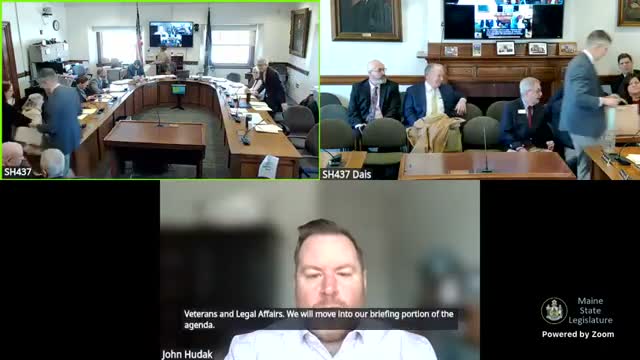
Summary
Office of Cannabis Policy officials told a legislative committee the December executive order directing rescheduling to Schedule III begins an administrative process that could bring federal tax relief to cannabis operators, while federal hemp changes will require FDA/HHS rulemaking and may constrain some full‑spectrum CBD products.
The Office of Cannabis Policy briefed the Joint Standing Committee on Veterans and Legal Affairs about recent federal actions on cannabis and hemp and their likely impacts on Maine law and businesses.
John Hudak, who joined the committee by video, explained that an executive order issued Dec. 18 directs the attorney general to pursue rescheduling cannabis from Schedule I to Schedule III. He emphasized that rescheduling is an administrative process that requires coordination among the attorney general and the federal Department of Health and Human Services and is subject to rulemaking under the Administrative Procedure Act.
"Schedule 3 status... does not legalize cannabis. It does not decriminalize cannabis," Hudak said, adding that rescheduling would change how federal tax law treats cannabis businesses and could allow standard business tax deductions now denied to Schedule I/II producers. He said the change would not automatically alter federal criminal statutes and that congressional action would be needed for broader criminal‑law changes.
Hudak projected that rulemaking could begin within several months but warned that litigation and additional administrative steps could delay implementation.
Gabby Bearaby Pierce, policy director at OCP, summarized recent federal changes to the hemp definition included in an appropriations bill: Congress narrowed hemp’s definition to exclude a number of intoxicating cannabinoids and directed FDA and HHS to identify which cannabinoids should be treated like delta‑9 THC. For certain final consumer hemp products, the law sets a 0.4 milligram total‑THC‑per‑container limit and defers some container‑definition questions to FDA.
"0.4 milligrams of total THC per container," Pierce said, describing the numeric limit and the federal agencies' role in defining products and containers. She advised the committee that states should avoid rushing statutory changes until federal rulemaking clarifies technical definitions and compliance requirements.
Committee members asked about tax implications and timing. Hudak reiterated that rescheduling could allow federal business write‑offs now prohibited for Schedule I/II substances and that the timeline for final rules is uncertain but could start moving within roughly six months. Pierce flagged potential supply‑chain effects for Maine hemp processors because the state currently relies on imported hemp biomass.
OCP officials offered to provide further technical guidance and to share federal rulemaking updates with the committee.