
Lawmakers hear small‑distillery reforms as owner warns fees shave "roughly 20%" from tasting‑room sales
Get AI-powered insights, summaries, and transcripts
Sign Up Free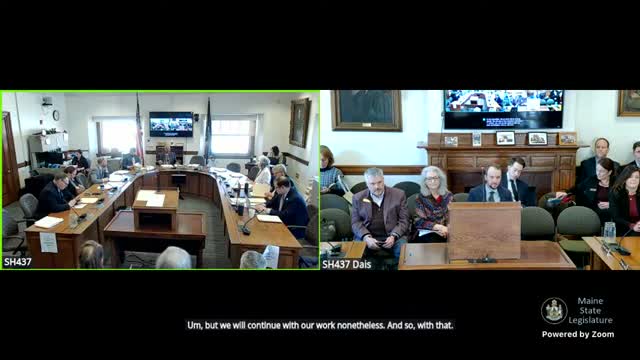
Summary
The Joint Standing Committee on Veterans and Legal Affairs heard testimony on LD 2160, a bill to ease licensing, reporting and tax burdens for Maine small distilleries. Sponsor Rep. Valerie Geiger and owner Nate Luce said changes would mirror brewery/winery rules; state regulators raised public‑health, statutory and constitutional concerns.
Senators and representatives on the Joint Standing Committee on Veterans and Legal Affairs heard public testimony on LD 21 60 on licensing and tax changes for Maine small distilleries.
Sponsor Representative Valerie Geiger of Rockland told the committee the bill would move the small‑distillery multi‑license renewal from one year to three years, shift inspections to align with renewals, allow limited self‑distribution and direct sales to retailers and on‑premises licensees, expand tasting‑room sales to include other locally licensed beverage makers, permit direct out‑of‑state shipping, reduce some state fees and move reporting from monthly to quarterly.
"We are requesting the following changes to current law," Geiger said, summarizing the bill’s six principal changes and noting the measure seeks to give distillers parity with small breweries and wineries.
Nate Luce, owner of Luce Spirits in Rockland, testified in support and urged modest changes to reduce regulatory and fiscal burdens. "Among Maine alcohol producers, only distilleries have to deal with the onerous laws that force us to pay roughly 20% of bottle sale income from our own tasting rooms to the state," Luce said, arguing that the current pricing formula is opaque and that fees constrain reinvestment and growth.
Luce described the pricing reports he submits monthly and said the state's formula incorporates multiple line items that are difficult to interpret. He asked the committee to consider extending license periods, reducing or eliminating spirits administrative and marketing service fees for on‑site and direct sales, and permitting limited self‑distribution similar to Kentucky’s 5,000‑gallon example cited in testimony.
State alcohol regulators and the state's contract distributor pushed back on several provisions. Louie Lucchini, identified in testimony as a Bureau director, said the bureau opposes limiting inspection frequency and objects to authorizing distilleries to sell other manufacturers’ products without a retail license. He explained that Pine State Trading is paid a percentage of net sales and described why the statutory discount structure exists to support craft producers.
The bureau noted small distilleries already benefit from elevated discounting and other statutory accommodations and cautioned that broad in‑state preferences for distillers could raise dormant‑commerce‑clause concerns under Granholm v. Heald. Regulators also said inspections and more frequent reporting serve public‑health and taxation needs; the bureau recommended keeping oversight tools available.
Committee members asked for documentation of the pricing calculations and for an example of what a distillery pays under the current formula. Chair Hickman invited Luce and regulators to submit the requested materials for the committee’s upcoming work session.
The committee closed the public hearing on LD 2160 and scheduled a work session to consider the bill and follow‑up materials.