
Brockton city auditor outlines plan for internal audits and to restore public 'open checkbook'
Get AI-powered insights, summaries, and transcripts
Sign Up Free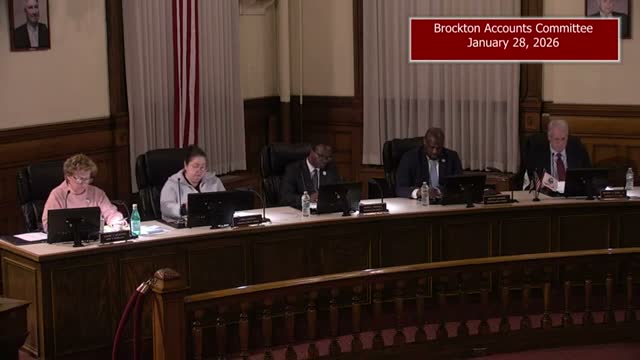
Summary
City auditor told the Accounts Committee he oversees roughly $618 million, intends to set up an internal audit program and an independent audit committee, and will work to restore the city’s public spending dashboard that has been inactive since about 2020.
The city auditor told Brockton’s Accounts Committee on Jan. 28 that he plans to establish a formal internal audit program and an independent audit committee to strengthen oversight of the city’s roughly $618,000,000 in finances. "I currently oversee $618,000,000," the auditor said, adding that internal audits and better reporting are priorities for his three-year term.
The auditor urged the council to create an audit committee composed of council members and two qualified independent members to review audit reports and follow up on recommendations. He said his office has completed one internal performance audit and plans more, prioritizing departments by size and transaction volume. "We would test for risk, we would test for fraud, we would test for waste," he said.
Why it matters: Councilors said repeated qualified opinions from prior external audits and chronic turnover have hampered reporting and can risk the city’s credit ratings. The auditor said the city met this year’s Department of Revenue reporting deadlines but needs better internal workflows so external audits are not delayed.
Committee members also pressed for public transparency tools. The auditor said the city’s open checkbook dashboard has been inactive since about 2020 and must be restored; he is evaluating options including a dashboard through OpenArchitects funded by a municipal compact grant. "We have to get that open checkbook back up," he said.
The auditor described grants reconciliation and fixed-asset accounting as persistent weaknesses that can prompt grant clawbacks. He recommended using the existing Munis grant module (or a comparable grant-management system) and centralizing documentation in public drives and standard operating procedures to avoid loss of records when staff turnover occurs.
The committee asked how independent members would be chosen; the auditor said the council president typically appoints council members to committees and that independent members should be vetted through interviews and background checks. He also said legal counsel should advise how an ordinance establishing the committee should be written.
The auditor said the office is now housing an assistant auditor for school finance and recently received a positive response from the inspector general’s office for recent work. He told the committee he operates independently under Massachusetts law and the city charter and that he has not been asked to act illegally or to withhold reports to state agencies.
Next steps: The committee urged the auditor to produce a draft charter and recommended the council take up an ordinance to create the audit committee and formalize internal audit procedures. Several councilors volunteered to work with staff on drafting ordinance language and the committee said it will meet monthly to review progress.