Committee advances amendment to HB256, agrees to revisit bill language on caregiver definitions
Loading...
Summary
The Judiciary juvenile committee heard HB256, a foster-parent bill of rights substitute, approved an amendment clarifying references to foster home approval (not licensure), debated whether to broaden protections to 'foster placements,' and agreed to table the measure for further drafting and legislative-council review.
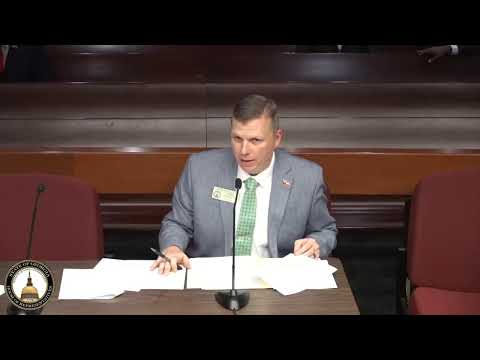
Chairman Gullett presented HB256, a substitute to update the foster parent bill of rights, to the Judiciary juvenile committee and said the measure ‘‘just clarifies existing rights around communication, training, case plan participation, and normalcy for children’’ while not changing judicial custody or adding new spending.
The sponsor told members the substitute recognizes today’s range of placements — including private agencies, relative caregivers and fictive kin — and adds administrative protections for caregivers, including an explicit anti-retaliation provision, a formal administrative grievance process and a right to request a certified volunteer advocate to accompany a caregiver during investigations or disputes. ‘‘Ultimately, this is just a stability and retention bill,’’ he said, citing national figures that 30–50 percent of foster parents leave each year.
Deputy Commissioner and General Counsel Regina Quick, representing the Department of Human Services (which includes the Division of Family and Children Services), spoke in support but warned of legal and confidentiality risks. Quick said Section 1 must account for existing confidentiality rules in title 49 so that volunteer advocates can receive information when necessary: ‘‘If you anticipate and desire that the volunteer advocate be in meetings where confidential information is expected to be discussed or disclosed, there may also need to be an exception for that advocate,’’ she said. Quick also cautioned that redefining ‘‘foster parent’’ broadly could create unintended legal consequences because foster parents are treated specially under the State Tort Claims Act; she urged the committee to consider instead extending protections to ‘‘foster placements’’ to avoid creating new, ambiguous statutory status.
Members pressed the sponsor on details. Representative Taylor asked whether the bill protects foster parents who face allegations from biological parents during visits; the sponsor responded the bill provides a certified volunteer advocate to help the foster parent through investigatory and administrative processes but clarified the advocate ‘‘is not an attorney’’ and ‘‘does not interfere with investigations and investigations.’’ Representative Santos asked whether complaints are reviewed by an independent body; Gullett and Quick said there is an independent avenue outside DFCS to raise complaints about the agency.
The committee debated a drafting fix in line 22 to avoid redefining established code language. Legislative counsel and members discussed aligning the bill’s definitions with existing code in title 49 and adding a subsection or exception to allow advocates appropriate access to confidential records when the law already limits disclosure.
The committee considered and approved a technical amendment that replaces references to licensure with ‘‘approval status’’ for foster homes (second amendment, LC481686S). The amendment passed by voice vote with no recorded no votes. Later, sponsor and members agreed the substitute needed additional cleanup and legislative-council drafting; a motion and second to table the bill were recorded and the chair said the committee will take the measure up at its next meeting.
The bill remains under revision; legislative counsel and department representatives indicated they will continue to work with the sponsor on precise statutory language to reconcile confidentiality exceptions, definitions and any potential tort-liability implications.