Get Full Government Meeting Transcripts, Videos, & Alerts Forever!
Get email alerts on the Labor Rights topic
No spam. Unsubscribe anytime.
Santa Monica council approves worker recall and retention rules for pier hospitality workers
Summary
After hours of debate and public testimony from pier workers and business owners, the City Council approved an ordinance extending recall and retention protections to hospitality businesses on city‑owned properties, including the Santa Monica Pier, with edits on enforcement provisions and direction for staff to provide more data on affected employers.
The Santa Monica City Council approved a new ordinance expanding recall and short‑term retention protections for hospitality workers on city‑owned properties, including restaurants and concessionaires on the Santa Monica Pier, in a 6‑1 vote. The ordinance requires successor employers to offer positions first to eligible workers and establishes a 90‑day retention period after a change in control.
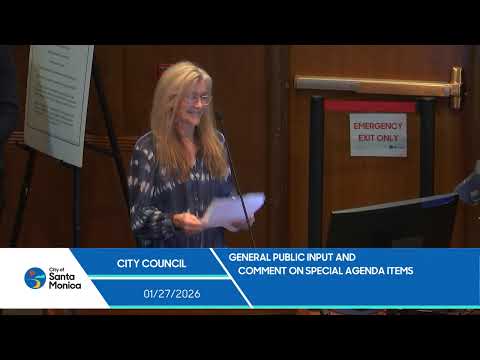
The measure, brought forward as an update to existing recall rules, was the subject of intense public comment and council debate. Workers and union organizers urged passage as a way to protect long‑standing employees after sudden closures; Ishmael, who identified himself as "one of the workers at Rusty's," told the council, "We are still fighting. Please pass the worker retention law so that we might go back to work." Business representatives and the California Restaurant Association warned the ordinance would raise operating costs and invite litigation; a California Roadhouse representative said the company is willing to interview former employees but objected to rules that limit managerial staffing decisions.
Council discussion focused on three enforcement and scope questions: whether to allow a private right of action, whether to permit awardable attorneys' fees, and the employee‑count threshold that triggers the ordinance. After negotiations on the council floor, members approved a version that keeps a private enforcement option but removes the explicit attorneys'‑fees award provisions in the municipal code and directed staff to return with more precise data on employer size and the likely fiscal impacts. Mayor Troesas cast a deciding vote in support; Council member Negrete recorded the lone "no." The council recorded the vote as Yes 6, No 1.
Staff described the ordinance as narrowly tailored to the city acting in a proprietary landlord role over city property such as pier leases and certain city‑owned hotels. The law defines eligibility as workers who performed at least a minimum number of hours over a recent period and who were separated for economic reasons. The ordinance also contains procedural steps for incumbent employers to provide lists of eligible workers and for successor employers to receive those lists.
Council members said the ordinance aims to balance worker stability with business viability. "Being pro worker is pro business," Council member Raskin said during remarks in favor of the ordinance, arguing the protections offer workers security that supports economic recovery. Opponents cautioned the city against adding litigation risk and urged clearer limitations to avoid unintended harms to small businesses.
Next steps: staff will return with a refined draft that incorporates the council’s direction on thresholds and implementation details before a second reading, and the city attorney’s office will prepare rules and outreach guidance for affected pier tenants and labor stakeholders.