Lifetime Citizen Portal Access — AI Briefings, Alerts & Unlimited Follows
Subcommittee opens hearing on biosecurity risks at intersection of AI and biology
Loading...
Summary
The House Energy and Commerce Subcommittee on Oversight and Investigations opened a hearing examining how advanced AI tools and more widely available biotechnology could outpace current oversight and pose new biosecurity risks, while underscoring potential medical benefits.
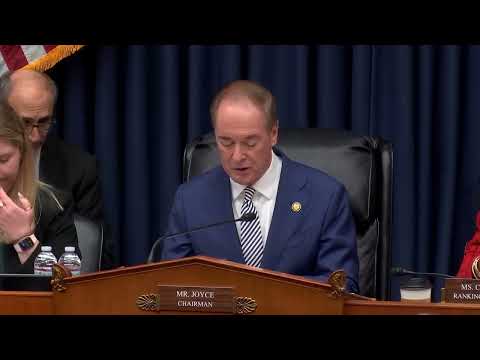
Unidentified Speaker, Chair of the Subcommittee on Oversight and Investigations, opened the hearing titled "Examining Biosecurity at the Intersection of AI and Biology," saying the panel would weigh both the promise of AI-enabled biotechnology and the need to minimize risks to national security.
The chair said the convergence of artificial intelligence and biotechnology could accelerate medical breakthroughs while also creating new paths for misuse. "The goal of today's hearing is to examine a rapidly evolving threat landscape at the intersection of artificial intelligence and biotechnology," he said, adding that the challenge is to "minimize that risk of misuse and ultimately to protect national security, while also maintaining public support" for scientific advances.
The opening statement highlighted several specific concerns raised for the subcommittee. The chair noted increased accessibility of biological tools, saying "a basic CRISPR gene editing kit can be purchased online for under $300," and warned that "advanced AI systems, like large language models ... and biological design tools ... are moving faster than our existing oversight frameworks were ever built to anticipate." He cited studies indicating that cutting-edge AI models can guide users through complex biological procedures and said "some LLMs have even been shown to outperform PhD level virologists on advanced troubleshooting tasks." He also referenced a study that "generated multiple synthetic viruses, some of them with capabilities that researchers previously had thought were impossible to achieve." All quotes above are from the chair's opening statement as recorded in the hearing transcript.
The chair framed these developments as a potential national security concern, saying experts worry that adversarial nations "like China, North Korea, Iran, Russia, and others might seek to exploit AI-enabled biologic design tools for malicious purposes." He told the panel that current government safeguards—mentioning the "dual use research of concern policy"—may not cover instances where an AI-designed organism is not identified as a select agent, not known to infect humans, or not developed with federal funding.
No formal motions or votes were recorded in the portion of the transcript provided. The chair thanked the witnesses for appearing and recognized the subcommittee's ranking member, "Miss Clark," for her opening statement. The record shows the hearing moved from the chair's opening remarks to the ranking member's appearance; subsequent witness testimony and committee questioning are not included in the provided transcript.
The hearing, as introduced in the transcript, set the committee's agenda around three tasks: (1) assessing gaps in existing oversight frameworks; (2) exploring the dual imperative of preserving medical innovation while preventing misuse; and (3) seeking evidence and testimony about specific AI capabilities and documented research findings that bear on biosecurity. The committee indicated it will rely on witness testimony to inform potential legislative or oversight responses.