Get Full Government Meeting Transcripts, Videos, & Alerts Forever!
Get email alerts on the Public Records topic
No spam. Unsubscribe anytime.
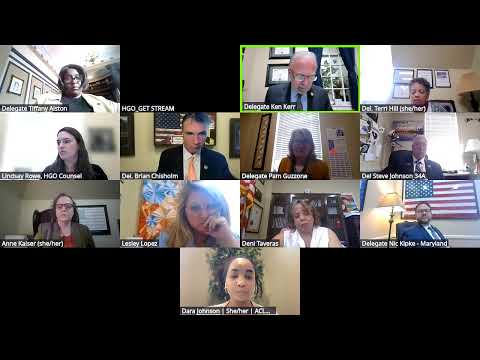
Subcommittee issues unfavorable report on bill to allow denial of records created for litigation
Summary
The subcommittee voted an unfavorable report on SB555 after members raised transparency concerns and AG office staff and agency witnesses described narrow situations where litigation-preparation materials create operational burdens; the panel said the proposal needs more work.
SB555 would authorize, but not require, custodians under the Maryland Public Information Act to deny inspection of records created for pending or reasonably anticipated litigation in which the State or a subdivision is or may be a party. Counsel explained the bill's limits and the senate amendments narrowing coverage to records created for purposes of litigation.
Several members objected on transparency grounds. "I'm not in favor of this bill. I think that it is troubling that we are kind of obstructing public information," said Delegate DeVries. Delegate Chisholm echoed concerns about overreach and noted many litigation‑related protections already exist under federal and state law.
Representatives from the Attorney General's Office, including a subject matter expert, argued the bill addresses practical burdens: Patrick Hughes cited examples where broad public information requests forced agencies to parse line‑by‑line privileged and litigation‑preparation materials, disrupting litigation work and non‑attorney units that prepare claims. The AG's office emphasized the senate amendment narrowed the scope to records created specifically for litigation and not underlying evidentiary documents.
Members remained unconvinced that the amendment sufficiently avoided overbroad denials of records. The subcommittee voted to issue an unfavorable report on SB555 and asked parties to continue negotiations.
What happens next: An unfavorable report sends the bill to the full committee docket unfavorably; sponsors and AG's office signaled willingness to continue discussions to narrow language and clarify that underlying evidence and pre‑existing records remain disclosable.