Get Full Government Meeting Transcripts, Videos, & Alerts Forever!
Get email alerts on the Senate Bill 47 Hospital Emergency Pregnancy topic
No spam. Unsubscribe anytime.
Subcommittee holds Senate Bill 47 on hospital care for pregnancy emergencies for further review
Summary
The Public Health and Minority Health Disparity Subcommittee held Senate Bill 47 after members raised hospital concerns and questions about overlap with federal EMTALA and state enforcement; the chair said the bill will be reviewed further and asked members to watch committee emails.
The Public Health and Minority Health Disparity Subcommittee of the Health and Government Operations Committee on April 7 held Senate Bill 47 for further review after questions about hospital opposition and how the measure interacts with federal law.
The bill would require a hospital that determines a patient has an emergency pregnancy-related medical condition to use available staff and facilities to provide further examination and treatment necessary to stabilize the patient, "including the termination of a pregnancy when the termination is medically necessary to stabilize the patient," a staff summary said. The measure also includes penalties against hospitals for noncompliance, with a provision allowing a state fine to be stayed if a hospital is subject to a federal fine, and narrows hospital-level conscience exceptions in certain circumstances.
Why it matters: supporters say the bill would ensure pregnant patients receive stabilization and necessary treatment at hospital facilities, while some hospitals raised operational and legal concerns. Sponsors contend the bill is narrower than federal EMTALA and, unlike federal law, would allow state enforcement through the Attorney General's Office and the Department of Health.
Committee discussion centered on two main questions: whether EMTALA already covers the situations the bill targets, and whether the state should have enforcement authority. Delegate Chisholm asked counsel whether EMTALA would already cover pregnancy emergencies; counsel said the bill is more narrowly focused on emergency pregnancy-related conditions and did not fully answer whether EMTALA would subsume the bill's provisions. Robin Elliott, speaking for the bill sponsor, said the differences are "(1) scope — it's more narrowly focused than EMTALA — and (2) it would allow the state to enforce this law." She added she would expect the secretary of health to be involved as well.
Several members said hospitals had raised objections during the senate process. "There was hospital objections at the senate hearing, but we've worked all those out, and I believe the hospitals have sent a letter to the committee expressing that they're are now neutral on the bill," sponsor Delegate Lam said. Delegate Riley countered, "I don't have that letter, and neutral is not support to me," and asked to hold the bill for further consideration.
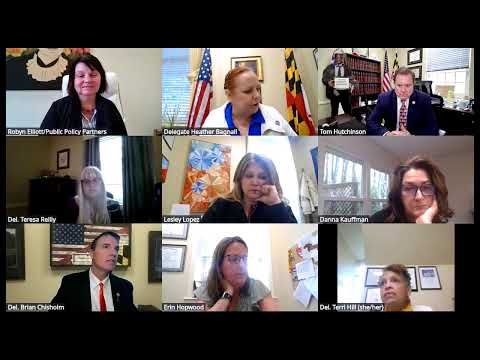
Chair Bagnell said committee rules allow each member one hold per session, noted members should watch committee emails during sine die, and announced she would hold the bill for additional review. No committee vote was taken. "I'm gonna go ahead and hold this bill for us for further review. Watch your emails," the chair said before adjourning the subcommittee.
Next steps: the subcommittee did not take a vote and deferred further action; members were told to monitor committee communications for updates during sine die.