Get Full Government Meeting Transcripts, Videos, & Alerts Forever!
Get email alerts on the Park Governance Study topic
No spam. Unsubscribe anytime.
Study launched to map equitable nonprofit partnerships, visitation projections for Treasure Island parks
Summary
TIDA, 1 Treasure Island and Blue Point Planning launched a study to recommend nonprofit partnership models, visitation projections and equity strategies for programming and long‑term park governance; deliverables include a visitor report, stakeholder interviews and a final report this summer.
TIDA and planning staff introduced a study led by 1 Treasure Island and Blue Point Planning to identify equitable nonprofit partnership options and programming strategies for Treasure Island and Yerba Buena Island parks.
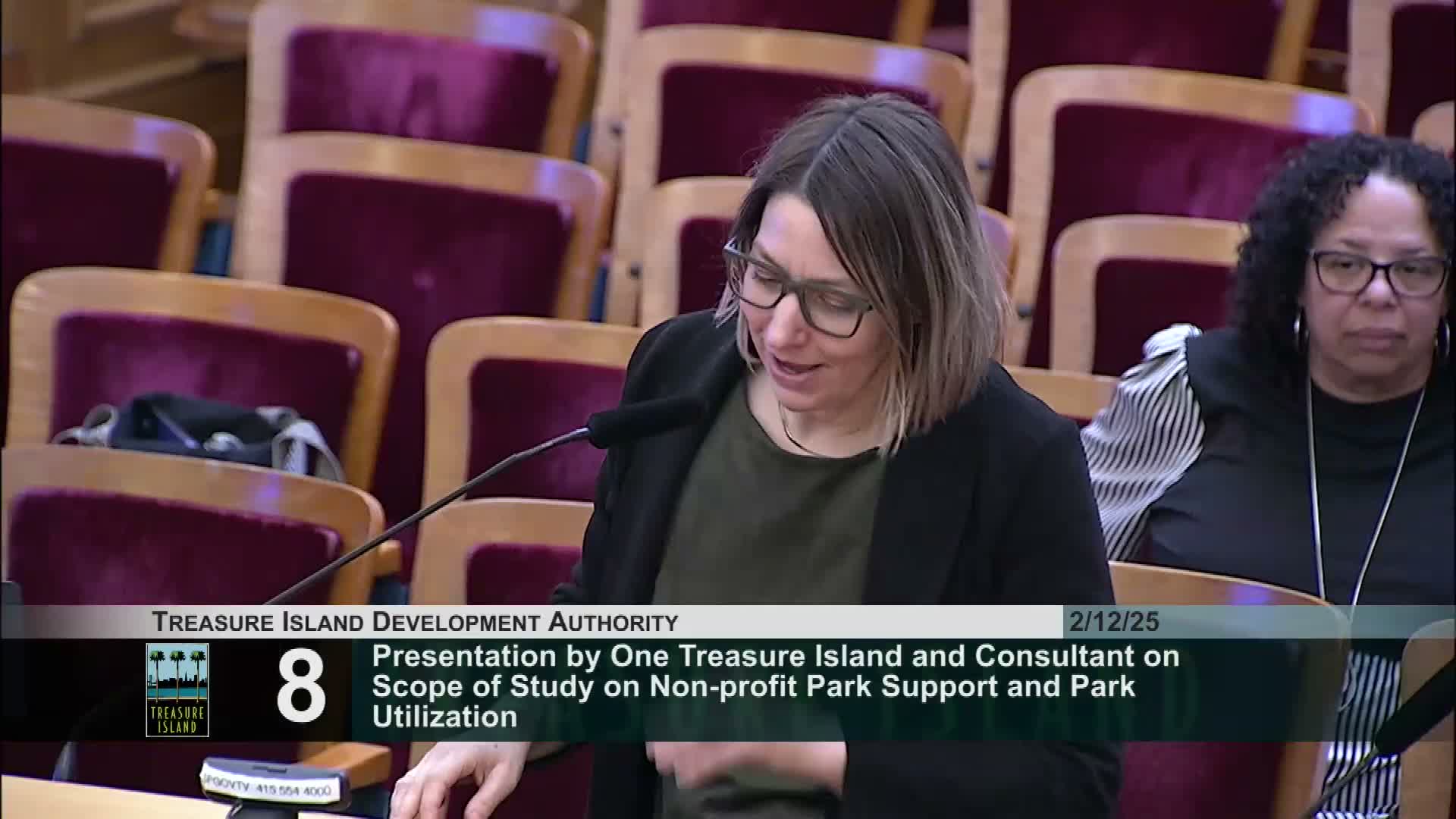
Jessica Look (Planning Department) and Mindy Craig (Blue Point Planning) said the project will deliver a visitor market assessment, governance and funding recommendations for nonprofit partnerships, and a racial equity strategy to ensure parks are accessible and relevant to residents across the Bay Area. Orca Consulting will produce visitation projections—current residents on the islands are estimated at roughly 3,000 with a projected future increase—and staff will compare Treasure Island to comparable urban parks (Tunnel Tops, Mission Bay, other West Coast examples) to develop annual, monthly and peak‑day visitation estimates.
Consultants described planned engagement: a public survey, roughly 25 stakeholder interviews, three resident focus groups, and interim reports in April with final deliverables by late summer. The work will feed into decisions about programming, infrastructure sizing (toilets, access, transit), phasing and which governance or nonprofit models to trigger as parks are opened.
Directors emphasized equity and regional access: studies should assess ferry/transit affordability and outreach to neighborhoods with limited park access. Consultants said recommendations will include triggers for organizational change as acreage and use intensity increase and will quantify staffing and amenity needs tied to projected visitation.