Get Full Government Meeting Transcripts, Videos, & Alerts Forever!
Get email alerts on the Budget topic
No spam. Unsubscribe anytime.
Mount Vernon NCA adopts 2026 budget, discusses bond proceeds and administration fees
Summary
The Mount Vernon New Community Authority adopted its 2026 budget, noting initial cash from a December bond closing and recurring administration fees. Board members pressed for clearer accounting of city-advanced legal costs and agreed to add regular treasurer reports and receivable tracking for amounts owed to the city.
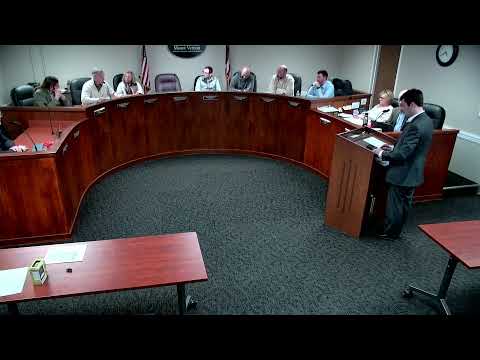
The Mount Vernon New Community Authority on Monday adopted its 2026 budget, approving a draft that reflects initial cash from a recent bond closing and planned annual fee income.
Michael Ringle, who presented the budget, told the board the authority received $26,700 from the Liberty Crossing bond closing and expects a $10,000 annual fee from that development going forward. He also described a $15,000 flat annual contract for an administrator to calculate and certify community development charges: "there's a contract that the new community authority has for Argus with Argus Growth Consultants ... in the amount of 15,000," Ringle said.
Board members pressed for accounting clarity. One member warned the authority is "burning cash faster than we're bringing it in" and urged caution before approving appropriations that could overstate likely expenditures. Ringle replied that some appropriations are placeholders that may not be expended and that the budget can be amended during the year.
Members also discussed how collections will be handled by the county treasurer and whether assessments would be prioritized. Ringle explained the charges are certified to the county auditor and placed on tax bills; those funds are then disbursed semiannually to the authority. "The county auditor will make a semi annual disbursement to the new community authority," he said.
The meeting included questions about city-advanced legal fees. The board agreed it would be useful to record any amounts the city has paid on the authority's behalf as a receivable on a balance sheet and to begin including a treasurer's report on future agendas so the board can track cash, receivables and repayments.
The budget was moved and seconded and approved by roll call. Board members also agreed to regular financial updates and the chair said the budget could be amended as circumstances change. The authority plans to assess community development charges in 2026 and expects collections to begin with 2027 tax bills as new structures increase assessed values.