Get Full Government Meeting Transcripts, Videos, & Alerts Forever!
Get email alerts on the Public Comment Wildfire Water topic
No spam. Unsubscribe anytime.
Residents urge stronger wildfire prevention and question regional water framing during Pitkin County plan review
Summary
During public comment at the Nov. 18 Planning & Zoning Commission meeting, residents urged more prevention work on wildfire risk after reports of unattended campfires and questioned whether municipal development approvals shift burdens to county residents; commissioners discussed watershed framing and the Shoshone-related water debate.
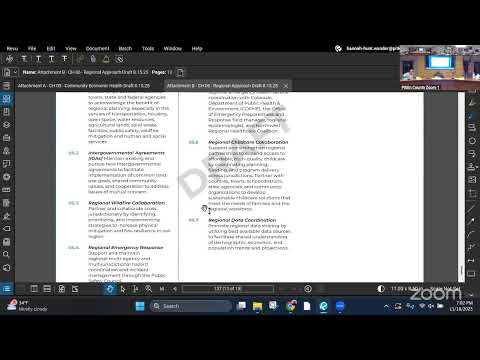
Two members of the public addressed the Planning & Zoning Commission Nov. 18 during the Vision 2050 chapter review, urging clearer prevention measures for wildfire risk and stronger county engagement on regional development and water issues.
Alan Jones told the commission he had heard residents report multiple campfires on BLM land this summer and recommended steps to reduce wildfire risk, including signage and public education. Jones said those campfires “could have been wildfires” and urged the county to incorporate prevention language and outreach into the hazard section and implementation items.
Amber Krakovsky of Woody Creek criticized how municipal approvals have created downstream problems for county residents. “I just don’t understand how all these developments in municipalities can be approved, and yet it is up to those people that live in Pitkin County then have to figure out how to solve the problems,” she said, urging Pitkin County to push municipalities to pursue regional solutions.
Earlier in the meeting commissioners had debated watershed policy language for the Roaring Fork watershed and whether the plan’s wording could be read as favoring Upper Roaring Fork interests in water transactions such as the Shoshone-related discussions. Commissioners and staff agreed to broaden the plan’s framing to emphasize regional coordination — both at the watershed and larger Colorado River basin scales — and to coordinate policy language with the county’s water legal team and external partners.
No formal actions were taken during the public-comment period. Staff and commissioners acknowledged the points raised and noted that prevention, emergency communications, mountain-rescue outreach and watershed coordination will be considered as the plan’s implementation language is finalized. The commission will reconvene Dec. 16 to review updated policies and an implementation matrix.