
Senate committee advances economic development and housing drafts after staff revisions, records voice votes
Get AI-powered insights, summaries, and transcripts
Subscribe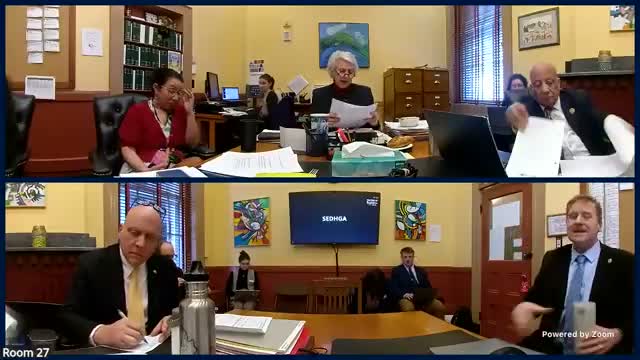
Summary
The Senate Economic Development, Housing & General Affairs committee reviewed draft economic development and housing bills (draft 2.3), added studies and task force members including VORAC and the state treasurer, and voted to refer the drafts for further committee work; committee recorded voice vote tallies reported as 4‑0‑1 on referral motions.
The Senate Economic Development, Housing & General Affairs committee on Jan. 30 reviewed two committee bill drafts on economic development and housing, accepted staff revisions as introduction drafts and voted to refer both measures for further committee work.
Committee staff pointed to several substantive changes in the economic development draft (identified in the hearing as draft 2.3). The bill added a $200,000 allocation to the Vermont Outdoor Recreation Economic Collaborative (VORAC) to fund an outdoor recreation economic impact study intended to inform how the state supports an estimated $2.1 billion outdoor recreation industry. Staff also described a new Section 7 authorizing a business resource study that would inventory in‑state and out‑of‑state resources for businesses at startup, early, middle and mature stages and report findings to the business development task force by Oct. 1 (year referenced in the draft).
The committee reviewed proposed task force membership changes including adding the state treasurer or designee, replacing the secretary of the ACCB with the commissioner of economic development or designee, and naming representatives from the Vermont Chamber of Commerce, the Vermont Futures Project and the CEO of Hula.
On the housing elements, staff said several sections were removed from the draft — notably language tied to a separate housing‑by‑design vehicle — and that some housing topics (opt‑in/opt‑out, interim exemptions and extensions) will be taken up in joint hearings with the Senate Natural Resources and Energy committee, which is expected to lead on that subject matter.
After discussion and expressions of reservation about spending and certain programmatic choices, the committee moved and seconded motions to refer the economic development and housing drafts for continued committee work. Both motions were carried by voice vote; the clerk reported the tallies as "4‑0‑1." Several senators voiced specific concerns, including reservations about accelerator funding and potential carve‑outs of treasury lending authority, but supported advancing the drafts as working documents.
Why it matters: The drafts contain new state investments and structural changes to task force membership that will shape how state agencies coordinate business support, outdoor recreation planning and housing policy. Interim and final report deadlines were set in the draft schedule to guide follow‑up work.
Actions taken: The committee formally moved to refer the economic development draft and the housing package as committee bills for additional work; records reflect referral motions and voice vote tallies of 4‑0‑1 for each motion.
Quotes: "Highlights in yellow are the new additions to the bill," staff said while walking members through the draft. "We would ask for a motion for us to motion for the report," the chair said before recording the voice vote.
Ending: Both drafts were referred for further committee consideration; staff and sponsors will continue drafting changes and prepare for follow‑up meetings and joint hearings as needed.