
Vermont regulators brief Senate committee on federal cannabis rescheduling, urge regional planning
Get AI-powered insights, summaries, and transcripts
Subscribe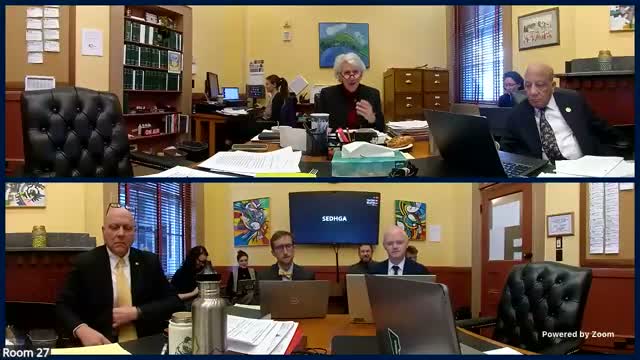
Summary
Legislative counsel Tucker Anderson and Cannabis Control Board chair James Pepper told the Senate Economic Development, Housing & General Affairs committee that a Dec. 18 executive order accelerating federal rescheduling and proposed limits on CBD products could reshape Vermont’s market; they urged outreach to neighboring states and creation of an exploratory commission to consider interstate compacts and banking options.
Tucker Anderson, legislative counsel, and James Pepper, chair of the Cannabis Control Board, told the Senate Economic Development, Housing & General Affairs committee on Jan. 30 that a recent federal executive order has put Vermont on notice to prepare for possible rescheduling of cannabis and new restrictions on CBD products.
Anderson summarized the federal path under the Dec. 18 executive order, saying the directive ‘‘directs the AG to take all necessary steps to reclassify cannabis to Schedule 3,’’ a move that could expand research access, allow state operators to deduct some business expenses for federal tax purposes and change accepted medical uses. He cautioned the committee the process involves drafting a final rule, interagency review and publication in the Federal Register — and that Congress could intervene at any stage.
The presenters flagged a second federal action aimed at CBD and similar products: a proposed federal limit that would cap certain products at 0.4 milligrams per container beginning in November 2026. Anderson contrasted that proposal with Vermont’s threshold for distinguishing hemp‑derived and intoxicating cannabis products, which he noted in the briefing as 1.5 milligrams of delta‑9 THC, and warned a 0.4 mg federal limit “essentially eliminates the hemp‑derived market” as currently configured.
Pepper described enforcement and market implications, noting Vermont maintains a product registry and QR‑code system for registered products but that out‑of‑state or unregistered goods would remain difficult to police. He also reported preliminary market analysis showing ‘‘about 32% [of] cannabis consumers in Vermont remain on the unregulated market,’’ and said price and convenience are the primary reasons consumers remain outside the regulated system.
Why it matters: Rescheduling or federal CBD limits could affect growers, retailers, banking access, product availability and state tax revenue. Committee members repeatedly asked how Vermont should respond to protect its craft producers and to avoid having lower‑cost out‑of‑state product overwhelm the local market.
On possible state responses, Anderson outlined two broad legal avenues: an interstate compact that would likely require congressional approval if it expanded state authority in ways that encroach on federal power, or a strategy of adopting uniform mirror statutes among cooperating states that could be implemented without centralized federal approval. He also told the committee one potential upside to regional arrangements could be access to state‑chartered banking structures that would support cannabis businesses where federal banking obstacles persist.
Senator Alice Clarkson, speaking later in the hearing, urged immediate outreach and asked Anderson to ‘‘initiate that conversation with your regulators to see what their appetite is and what are their concerns,’’ recommending the formation of an exploratory commission or similar forum to report back promptly on feasibility and resource needs.
What’s next: Anderson and Pepper said they are in close contact with New England regulators and will begin coordinating next steps. Committee leadership asked staff to identify specific sections of draft bills to address in upcoming meetings and to schedule follow‑up briefings with the governor’s office and regulators.
Quotes: "The executive order directs the AG to take all necessary steps to reclassify cannabis to Schedule 3," Tucker Anderson said in his briefing. "About 32% cannabis consumers in Vermont remain on the unregulated market," James Pepper reported from an initial market analysis. "I would really like to ask you if you would initiate that conversation with your regulators… and come back to us in the next week or two," Senator Alice Clarkson said, urging rapid coordination.
Ending: The committee did not take formal action on legislation in this segment but directed staff and presenters to convene regional regulators and report back on options for an exploratory commission and other near‑term responses to the federal actions.