
House Judiciary reviews draft criminalizing interference with voters and election officials
Get AI-powered insights, summaries, and transcripts
Sign Up Free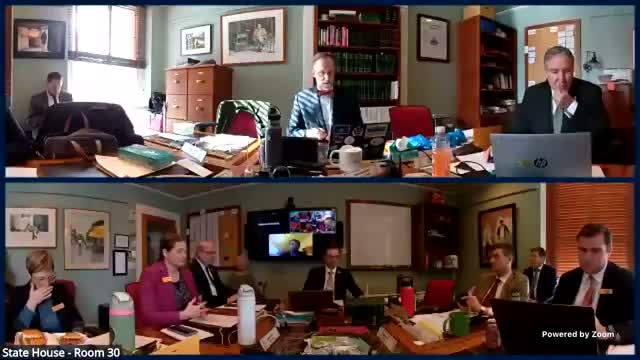
Summary
The House Judiciary Committee reviewed draft 2.1 of H.541 to create a new offense for "interference with voters and election officials," debated mens rea language drawn from Counterman v. Colorado (2023), and heard support from election officials and the attorney general's office; no vote was taken.
The House Judiciary Committee met Wednesday to consider draft 2.1 of a committee amendment to H.541, a bill that would create a new offense titled in the draft as "17 VSA 19 75" for "interference with voters and election officials." Tim Devlin, legislative counsel, walked members through the new language and said the draft adds an "intentionally or recklessly" mens rea and explicitly covers causing someone to vote or not vote "for any candidate or public question."
Ryan Kane, deputy solicitor general for the Vermont attorney general's office, told the committee he saw "no obvious facial constitutional deficiencies in the statute as drafted" and said adding recklessness aligns the bill with recent Supreme Court precedent, including Counterman v. Colorado (2023), while preserving a compelling governmental interest in protecting election integrity. "Even if there is speech that is not a true threat that's proscribed by the statute, there's a compelling governmental interest here in ensuring the integrity of elections," Kane said.
Deputy Secretary of State Lauren Hibbert and Sean Shand, elections director, said the secretary of state's office supports the bill and the mens rea change, noting town clerks have long been concerned about threats and pressure around elections. "This is a very big concern for town clerks," Hibbert said, adding the office appreciates clarity that could give voters and election officials more confidence.
Kim McManus, representing the Department of State's Attorneys and Sheriffs, told the committee the revisions are helpful and endorsed having both intentional and reckless standards to give prosecutors flexibility; she cautioned that questions about what counts as "intimidating," "threatening" or "coercing" are likely to be resolved through litigation and factual development. The committee repeatedly returned to whether the draft struck the right balance between protecting voters and respecting constitutional speech protections.
Chair members signaled an intent to move toward a committee vote later in the week if no additional issues emerge: the chair said the bill may be scheduled for a vote on Friday. No formal motion or vote occurred during the session.
The committee requested follow-up on open technical issues, including precise drafting to reflect Counterman guidance, and noted the attorney general's office and election officials will remain engaged during the final edits. The measure will return to the committee calendar for further action.