Get Full Government Meeting Transcripts, Videos, & Alerts Forever!
Get email alerts on the Agenda Management topic
No spam. Unsubscribe anytime.
Holyoke committee weighs reducing agenda bloat, improving SeeClickFix follow‑up
Summary
Committee members discussed routing many council 'receive and adopt' orders to departments, improving SeeClickFix responsiveness and adding cost estimates to requests so the budget process can address them. The committee agreed to pursue process changes and marked the maker's order 'complied with.'
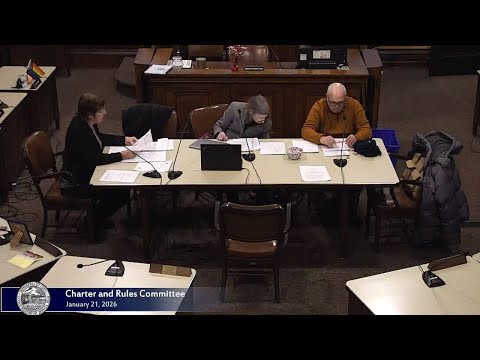
Holyoke’s Charter and Rules Committee spent substantial time on Jan. 6 discussing whether the City Council’s long agendas—often 70–90 items—should be slimmer and whether many items filed as council orders would be better handled as departmental communications.
Councillor Meg McGrath Smith raised the issue, saying many agenda items function as messages to department heads rather than matters needing council action. “A lot of it’s about micro infrastructure,” McGrath Smith said, adding that councilors often file repeated orders because prior requests did not result in department action.
Committee members proposed several changes: a standing review of SeeClickFix items during committee meetings so department responses are visible; a way to attach cost estimates to constituent requests so they can be considered during budget season; and alternate reporting pathways for residents who are not tech‑savvy. Jeffrey, a city staffer, said the engineer has proposed a task force to create a more formal assessment pathway for common traffic issues such as speed humps.
After discussion the committee moved that the maker’s order be “complied with,” signalling intent to pursue process changes (either by rule or ordinance) and to coordinate with departments and ordinance staff on next steps. Members asked staff to prepare information on outstanding petitions (for speed humps, paving status and estimated costs) and to consider a standing item in public safety to pull up SeeClickFix issues for committee review.
Next steps: staff follow‑up on SeeClickFix task force proposals, departmental cost estimates for recurring requests, and potential rule or ordinance language to redirect routine departmental communications away from full council agendas.