Get Full Government Meeting Transcripts, Videos, & Alerts Forever!
Get email alerts on the Zoning Fhaa Ada topic
No spam. Unsubscribe anytime.
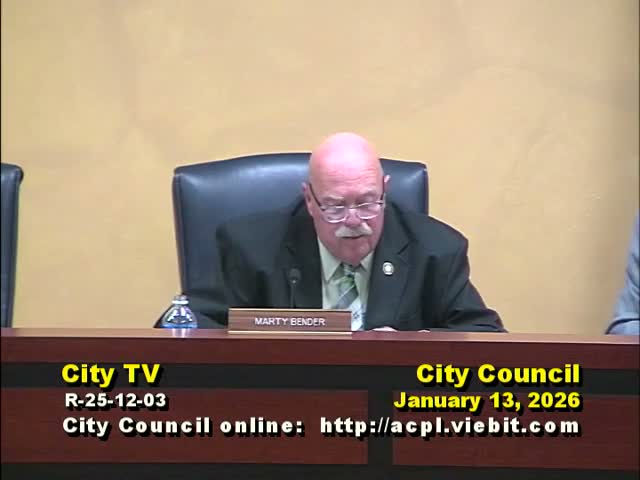
Fort Wayne council approves zoning changes to align with federal housing, disability law after heated debate
Summary
The Fort Wayne Common Council voted 6–3 to amend the city zoning code to comply with the federal Fair Housing Amendments Act and the Americans with Disabilities Act, removing a separate local category for addiction treatment centers while adding reasonable-accommodation language and related definition changes.
Ben Roussell, executive director of the Department of Planning Services, told the Fort Wayne Common Council the amendment is intended to bring the city's zoning code into compliance with federal law and clarify how group residential and treatment uses are treated.
"This amendment proposes to update language and bring the zoning ordinance into compliance with the Fair Housing Amendments Act," Roussell said, adding that the proposal also aligns treatment-center uses with medical-office uses to reflect Americans with Disabilities Act guidance.
The measure, G25-11-15, removes a standalone local definition for "addiction treatment centers" and adds reasonable-accommodation language that staff said would prevent the city from being vulnerable to federal lawsuits. Planning staff said the amendment does not change how the ordinance permits homeless shelters or residential reentry facilities.
Local treatment providers and recovery leaders urged passage. Nate Mollering, chief executive officer of Fort Wayne Recovery and Allendale Behavioral Health, said increasing responsibly run treatment capacity helps reduce overdose deaths. "When there's an increase in treatment services available and treatment services that are done responsibly, respectfully, and safely, that overdose numbers do go down," Mollering said.
Opponents among council members said the amendment narrows local discretion and could increase the density of certain facilities in residential neighborhoods by eliminating a 3,000-foot separation standard. Councilman Yell called the ordinance "an abomination," saying it could allow clustering of facilities in every neighborhood. Planning staff and legal counsel replied that separation requirements tied only to disability status would likely be found discriminatory under federal law and thus unenforceable.
Councilman Scott Myers introduced and won a separate amendment at the table to remove language that explicitly categorized "addiction treatment centers" (sometimes referred to by speakers as methadone clinics) so the city could study appropriate zoning rules before codifying them; that amendment passed 9–0. After further discussion the full council approved the overall ordinance 6–3.
The planning department said enforcement of zoning standards remains complaint-driven and that any facility dispensing medication must also meet state and federal licensing requirements. Legal counsel noted a recent Indiana case prompted some of the revisions and that the ordinance's effective date is scheduled for March 7, 2026.
Council members said they will monitor neighborhood impacts and compliance with clinical quality standards as cases come forward; the ordinance does not itself open any new treatment sites but changes how staff will classify and review applications going forward.
The council recorded a final vote of 6 in favor, 3 opposed.