Get Full Government Meeting Transcripts, Videos, & Alerts Forever!
Get email alerts on the Zoning Parking topic
No spam. Unsubscribe anytime.
Lewiston council advances parking-lot code amendments after reconsideration from Planning & Zoning
Summary
After a line-by-line staff briefing, Lewiston council directed staff to proceed with first reading of Ordinance 49-59 as amended (removing a subsection and renumbering), which clarifies the definition of a parking lot, landscaping and dust-palliative rules, and removes a performance-bond requirement; councilors discussed small-business impacts and ADA constraints for gravel lots.
Lewiston, Idaho — Jan. 26, 2026
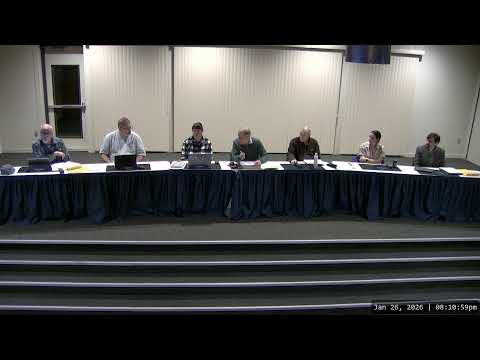
The Lewiston City Council on Monday moved forward with the first reading of Ordinance 49-59, a set of amendments to city code governing parking-lot definitions, landscaping, dust mitigation and related permitting, after a staff line-by-line briefing and council discussion.
Assistant City Planner Katie Hollingshead described the primary changes: clarifying that a parking lot is "more than five vehicles" and adding a square-footage metric (2,400 square feet) to provide consistency across code sections; moving the dust-palliative rules for pre-1994 gravel lots into the main section; removing a requirement that performance bonds be posted for certain parking-lot work; and adding buffer and screening requirements where commercial parking abuts residential lots.
Council members raised small-business concerns, asking whether the new thresholds and landscape requirements would unduly burden startups; Hollingshead said many small businesses occupy existing buildings and would not reach the new thresholds, and that the recent reduction in parking minimums reduces the regulatory footprint. Councilor Klein asked why gravel couldn't remain an option; staff said larger parking areas must meet ADA requirements that generally require a paved accessible stall.
Legal counsel noted that Planning & Zoning had followed the public-notice and hearing process and had recommended the amendments; the council voted to proceed with the first reading as amended (removing a subsection that staff said was intended to be excluded and renumbering the remaining subsections) and scheduled the required readings to comply with notice and process.
What comes next: Staff will place the first and second readings on the next regular agenda and plan a third reading/adoption at the following meeting if no further revisions are required. If the council seeks substantive additional changes, staff warned the ordinance might need to return to Planning & Zoning and repeat notice requirements.