
County hears nonbinding MOU endorsing 'treatment‑first' approach to homelessness; commissioners discuss integration with housing programs
Get AI-powered insights, summaries, and transcripts
Subscribe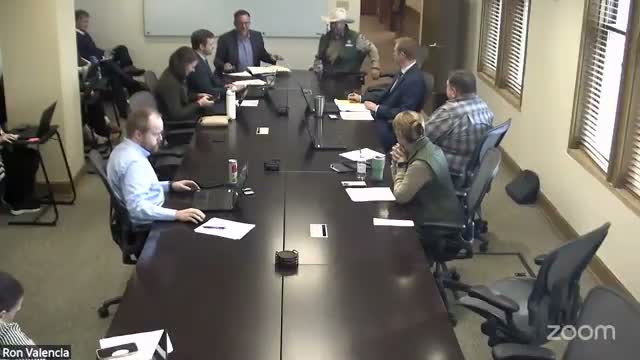
Summary
Community leaders and county officials presented a nonbinding memorandum of understanding that signals support for an accountability/treatment‑first approach to homelessness and to align with federal HUD priorities. Presenters said it makes no funding commitments; commissioners asked for more data and emphasized integrating treatment with rapid housing and wraparound services.
A group of community leaders presented a draft memorandum of understanding (MOU) for Spokane County and municipalities that would serve as a nonbinding messaging platform endorsing an accountability‑and‑treatment approach to homelessness and public‑order concerns.
The community presenter described the MOU as a statement of shared priorities rather than a funding or legal commitment: “We support it purely a, messaging platform without any liabilities or funding tied into it,” the presenter said. He and others said the objective is to align local policies with a federal executive order that would tie certain HUD dollars to communities that elevate accountability and treatment goals.
The sheriff (speaker who identified himself in discussion) and Prosecuting Attorney McCollum (introduced in the discussion) both spoke in favor of the approach as a complement to, not a replacement for, housing. The sheriff emphasized that some people experiencing homelessness have severe substance‑use or mental‑health conditions that require treatment, and that treatment coupled with housing and accountability can produce better outcomes. Prosecuting Attorney McCollum said investing in treatment (rather than simply giving one‑time cash) is essential to break cycles of addiction.
Presenters said the MOU has been circulated and five municipalities — Liberty Lake, Millwood, Airway Heights, Deer Park and Medical Lake — have signed on so far. Commissioners asked staff for the MOU text and for more data on outcomes, stressing that rapid access to housing remains important for many individuals and that permanent supportive housing must include robust wraparound services.
Why it matters: The MOU would be a public signal of county and municipal priorities and could influence the county’s eligibility or positioning for future federal grants, according to presenters. Commissioners were receptive but requested more information and a chance to discuss the MOU in a study setting before any formal county action.
What’s next: Staff and presenters agreed to continue outreach to remaining municipal governments, to circulate the MOU text to commissioners, and to return with additional briefings and data on service integration and outcomes.