
Vermont Veterans Home warns of capacity limits, $49 million rebuild need and budget risks
Get AI-powered insights, summaries, and transcripts
Subscribe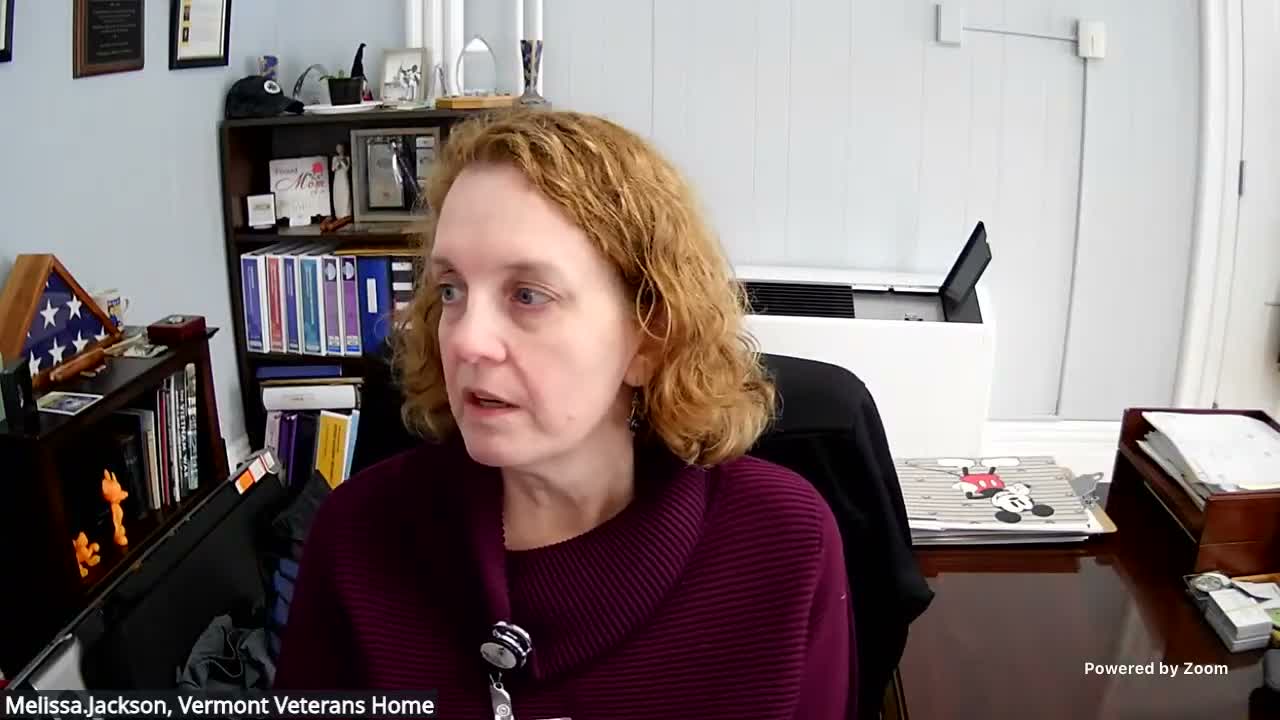
Summary
Leadership at the Vermont Veterans Home told the Government Operations & Military Affairs committee the facility is operating with a 30‑bed wing offline, a waiting list of about 40 (mostly for memory care), and an estimated $49 million rebuild; officials flagged staffing progress but warned of reimbursement and waiver risks that could add $4–5 million to the general fund request.
Melissa Jackson, speaking for the Vermont Veterans Home, told the House Government Operations & Military Affairs committee the state‑owned facility faces capacity and budget pressures while maintaining high quality ratings.
Jackson said the home has 130 skilled nursing beds but a current maximum census of 99 because a 30‑bed wing is offline for extensive repairs. Design work is complete and the estimated cost to tear down and rebuild that wing is about $49,000,000; Jackson said the federal VA would cover roughly 65% of that project with the state responsible for about 35%.
Jackson described the home's mission and history, noting the facility (a state veterans home, not part of the VA) serves veterans, spouses and gold‑star parents and has been recognized with national awards, including a silver quality award from the American Health Care Association/National Center for Assisted Living and listings in US News & World Report. She said those recognitions reflect investments in care rather than newer building finishes.
On operations and finance, Jackson said about 72% of costs are fixed (roughly $23,000,000) for salaries, benefits, the Medicaid bed tax and utilities. She described how the Medicaid bed tax works: Medicaid‑certified beds are assessed a per‑bed tax (about $4,400 per bed at this site) that the state can leverage to obtain federal matching funds; the home still pays the bed tax on dormant/licensed beds to retain licenses.
Jackson said the facility expects about $8,600,000 in VA funding for FY27 and noted a Medicaid settlement built into the FY27 budget of about $3,700,000. She and Steve McClafferty told members the VA basic per diem is roughly $146.98 for nursing home residents under 70% service connection and that the 70%+ service‑connected ‘‘all inclusive’’ daily rate is about $567. The home raised a concern that certain high‑cost oral medications (Jackson cited $30,000–$50,000/month oral chemotherapy) create a reimbursement gap that can make admitting fully service‑connected veterans financially untenable; Jackson said some private providers receive supplemental reimbursement for expensive drugs while state homes do not.
Staffing remains a major operational challenge but Jackson reported progress: the home has about 192 state employees and 50 temporary employees, and a new director of nursing services has helped hire roughly 16 nursing staff; LNA classes have produced several new hires. The home previously relied on more than 50% agency staff and has reduced that reliance through recruitment and training.
Jackson also described an 1115 Medicaid waiver (applied for by the Agency of Human Services on the home’s behalf) that allows the facility to recover actual costs for Medicaid residents. The waiver runs through 12/31/2027 and, on renewal, AHS must show the waiver remains cost‑effective. Jackson warned that if settlement amounts exceed the federal upper payment limit the state could lose settlement funds and might need an additional $4–5 million in general fund support; she said there was no current indication this would occur but presented it as a risk to planning.
On demand, Jackson said the home’s waiting list contains about 40 people — primarily for the secured memory‑care unit — and she emphasized that beds typically open only when residents die, so reopening the offline wing is key to shortening multi‑year waits. Committee members asked for a budget memo and Jackson agreed to provide a budget request letter to support Appropriations Committee work.
The committee closed the Veterans Home update by thanking the witnesses and agreeing to coordinate a site visit.
Ending: The committee took no formal votes on the Veterans Home presentation; Jackson committed to providing the requested budget materials to committee staff for the FY27 process.