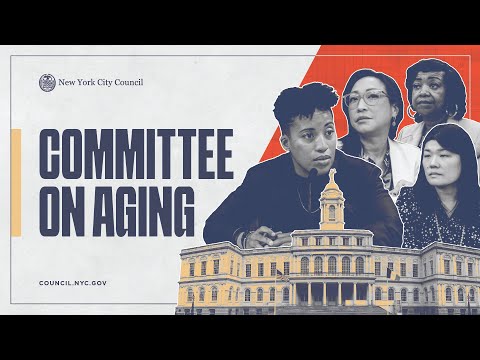
Council committee hears gaps in outreach as NYC officials flag data and capacity shortfalls on senior isolation
Loading...
Summary
At an oversight hearing, New York City Department for the Aging officials and community providers described large unmet need for anti-isolation services, limited data on who is unreached, and pilots to improve meal-driver tracking and digital training; providers sought more funding for community programs and NORCs.
Crystal Hudson, chair of the New York City Council Committee on Aging, opened a committee oversight hearing on social isolation among older New Yorkers by saying the time of year ‘‘heightens feelings of loneliness and disconnection’’ and urging the city to strengthen programs so older adults ‘‘belong across neighborhoods, cultures, languages, incomes, and mobility levels.”
Lorienkos de Vasquez, commissioner of the New York City Department for the Aging, told the committee the agency relies on a network of more than 300 older adult centers, case-management contractors, friendly visiting and home-delivered meals to reach older residents. She said the city has seen demographic growth — ‘‘nearly 2,000,000 New Yorkers are aged 60 and over’’ — and described initiatives including a community care plan, an advisory cabinet of older New Yorkers and a $9.3 million expansion tied to caregiving procurement to bolster local capacity.
Why it matters: Committee members and witnesses said gaps in data and staffing leave many isolated seniors unreached. The chair cited the agency’s 2025 needs assessment showing NYC Aging and its providers reach roughly 12% of the city’s older adult population; the commissioner said the system serves about 300,000 people while the older-adult population totals about 1.8 million, indicating substantial unmet need.
Key evidence and program details
• Outreach and referrals: De Vasquez said case managers and contracted providers receive referrals from community-based organizations, hospitals and clinicians and that friendly visiting participants are referred through case management. She added the agency requires providers to budget for active outreach, but acknowledged the department does not systematically track the share of clients who arrive via proactive outreach versus self-referral.
• Meals and touchpoints: The commissioner said the city served more than 10 million meals for older adults across the five boroughs last year — about 6.1 million through congregate older adult centers and 4.2 million via home-delivered meals — and described each delivery as an opportunity for human contact.
• Data and tracking limits: Committee members repeatedly asked for district-level counts of older adults living alone, referral-source tracking and measures of unmet need; De Vasquez said some data would require coordination with other city agencies, that the department does not currently track referral source for mental-health referrals, and that resource and staff‑hour constraints limit the agency’s reach.
• Winter and emergency outreach: Hudson asked whether the agency maintains a centralized ‘‘high-risk’’ winter outreach list. De Vasquez said there is no citywide high-risk list; instead the department coordinates with NYC Emergency Management and older adult centers, and that some weather advisories are sent via text or phone through OEM and local centers. She said the agency cannot yet quantify how many of the roughly 1.8 million older New Yorkers receive such messages.
• Accessibility and mobility: De Vasquez said the cabinet has worked with the Department of Transportation on sidewalk and curb‑cut audits and requested no‑standing zones at older adult center entrances; she acknowledged older adult centers do not consistently report accessibility barriers in a centralized way.
• Digital access: The agency reported 230 older adult centers offer digital literacy training to meet a local law requirement; De Vasquez said the department does not currently have a complete count of older adults who lack broadband, devices or the skills to use virtual programs and that NYCHA and other programs have narrowed some gaps but digital deserts remain.
• Mental-health services: De Vasquez described a hub‑and‑spoke model that embeds licensed clinicians in older adult centers and said 88 clinicians are embedded in centers; she also said the agency does not track referral sources for all mental-health connections, limiting the ability to measure how often socially isolated older adults are connected to clinical care rather than social activities.
Committee proposals and provider recommendations
Council members raised ideas including automatic outreach or enrollment at age milestones, better cross‑agency data sharing, and stronger liaisons with transit paratransit programs to reduce transportation‑related isolation. De Vasquez said some ideas have been explored and that solutions will require additional resources and cabinet‑level coordination.
Providers testifying urged more sustained funding for community programs and staff. Jordana Webber, chief program officer at the Service Program for Older People (SPOP), said her agency treats more than 1,000 older adults annually and called for increased investment in in‑home rehabilitation, outreach and technology that ‘‘increases human‑to‑human connection.’’ Mohammed Razvi, CEO of the Council of Peoples Organization, urged culturally competent counseling and said fear of immigration‑related policing is driving some immigrant seniors to withdraw from community activities. Anita Kwok of United Neighborhood Houses said settlement houses and NORCs are underfunded and advocated a city budget investment to create roughly 30 new NORCs in underserved neighborhoods.
Caregiving procurement
On a pending caregiving RFP, De Vasquez said the administration’s model shifts more funds and capacity to local providers while designating a citywide contractor to provide technical assistance; she declined to discuss RFP specifics because the procurement was active.
What the hearing did not resolve
Committee members pressed for district‑level counts of older adults living alone, systematic tracking of referral sources and a centralized high‑risk winter outreach roster; De Vasquez acknowledged those metrics and tools are limited or not currently tracked and committed to follow up on some requests.
The hearing concluded with Chair Hudson inviting additional written testimony and thanking providers and staff. Hudson said the committee will continue to press for better data and resources to reduce isolation among older New Yorkers.
Ending note: The committee highlighted a broad policy consensus that social connection must be elevated in planning and budgeting, and several witnesses urged the next mayoral administration to sustain funding and expand community‑based services.