UNICEF says temporary learning spaces returning children to school but protection and registry challenges remain
Loading...
Summary
UNICEF outlined efforts to get children back into temporary learning spaces and to provide psychosocial and protection services, while acknowledging hundreds of thousands of children remain out of formal education and that gender‑based violence and land/registry issues complicate reconstruction.
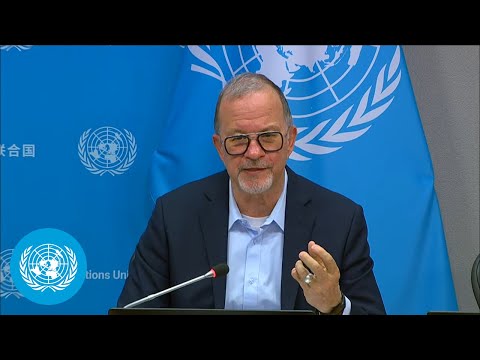
UNICEF Deputy Executive Director Ted Chaiban described efforts to return children to learning in Gaza through temporary learning spaces and psychosocial supports, while warning that the needs remain vast and fragile.
Chaiban said UNICEF and partners are "supporting over 250,000 children to resume learning" and that temporary learning spaces also provide important mental‑health and psychosocial support. He described a girl named Aya who told him she was "so glad to be learning again" and expressed a hope for a rebuilt Gaza.
On the broader education picture, Chaiban said more than 700,000 school‑age children have been out of formal education since October 2023 and that UNICEF plans a major "back to learning" campaign to expand access. He explained current temporary shifts often provide schooling three hours a day, three days a week, and that UNICEF provides top‑ups to teachers who have not been receiving regular salaries to enable the instruction.
Reporters also asked about protection issues. In response to Al Quds Al Arabi, Chaiban confirmed there has been an increase in gender‑based violence and examples of child marriage linked to economic collapse and displacement. He said UNICEF is working with national NGOs and social workers to provide counseling, referral services and basic protection, but described those services as "very embryonic" and in need of expansion.
On reconstruction and land claims, Chaiban said an objective recovery and needs assessment (RDNA) produced by multilateral partners should form the basis for reconstruction and that "no plans should be made for the use of that land ... without Palestinian voice." He emphasized the need for Palestinian agency in any decisions about land use and recovery.
The briefing closed with the agencies urging predictable access and greater support so temporary learning and protection gains can become durable.