
UNICEF and WFP say fragile ceasefire has eased suffering but Gaza needs urgent scale‑up and predictable access
Get AI-powered insights, summaries, and transcripts
Sign Up Free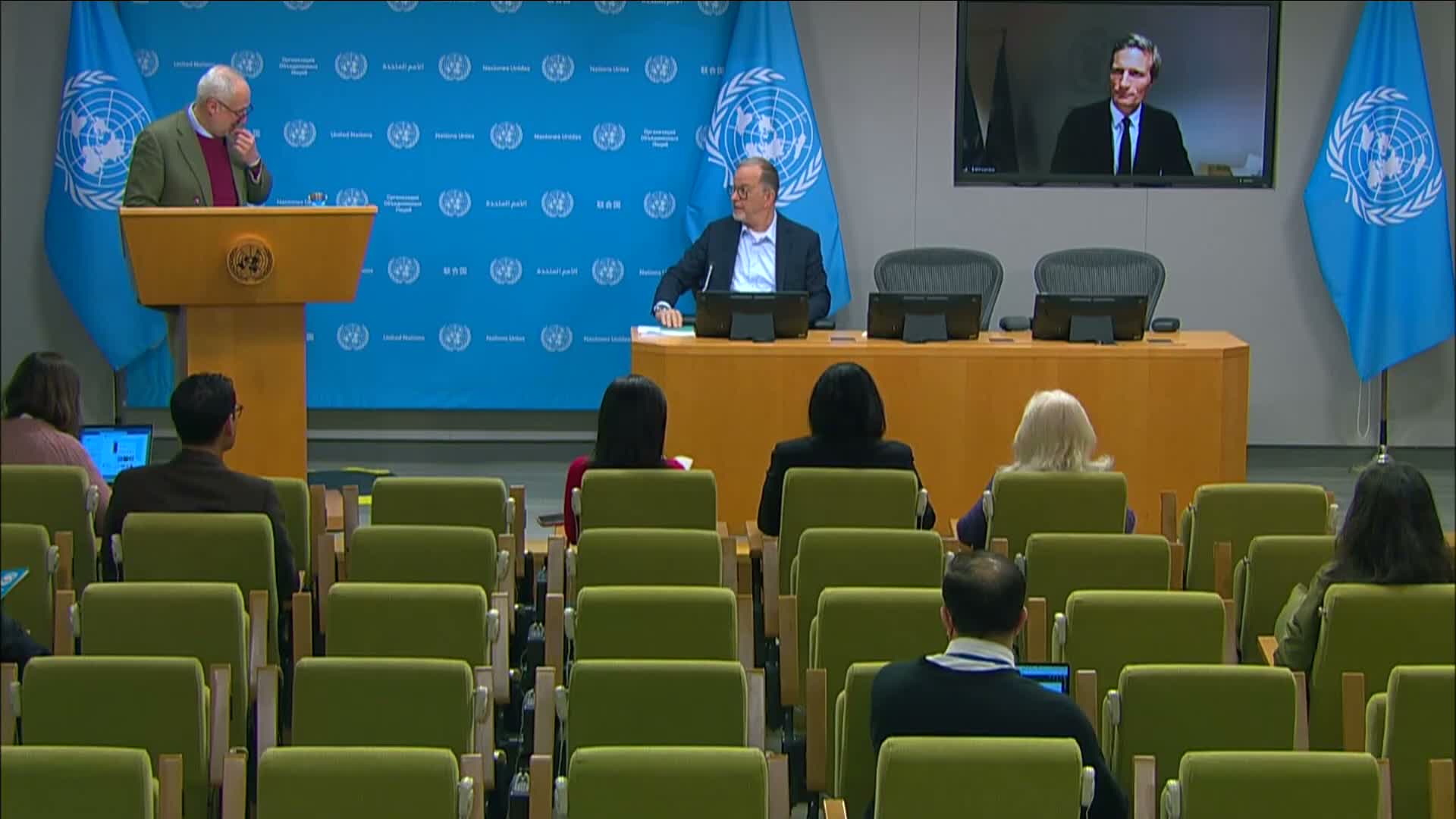
Summary
UNICEF Deputy Executive Director Ted Chaiban and WFP Deputy Executive Director Carl Skow told U.N. correspondents that a fragile ceasefire has allowed significant humanitarian gains but urged rapid expansion of shelter, permanent supplies and formal phase‑2 planning with Palestinian agency to avoid reversing progress.
At a United Nations briefing, UNICEF Deputy Executive Director Ted Chaiban and World Food Programme Deputy Executive Director Carl Skow said a fragile ceasefire has allowed more aid into Gaza and begun to reverse the worst effects of the crisis, but they warned that the gains are precarious without predictable access and phase‑2 reconstruction planning.
Chaiban, who said this was his fifth visit since the war began, told correspondents that "for the first time in many months, there are sign that an imperfect, fragile, but vital ceasefire is making a difference" for children and humanitarian operations. He cited improvements including more truckloads of life‑saving aid, returning commercial goods in markets and the restoration of pediatric intensive care at Al Shifa Hospital in Gaza City.
The briefing laid out specific shortfalls and priorities. Chaiban said UNICEF and partners have "reached more than 1,600,000 people with clean drinking water" and provided blankets and winter clothes to 700,000 people, but added that "100,000 children remain acutely malnourished" and that "1,300,000 people, many of them children, are in urgent need of proper shelter." He warned that more than 100 children have reportedly been killed since the ceasefire was agreed.
Both agencies called for three elements to sustain and build on current improvements: first, the ceasefire must hold; second, the National Committee for the Administration of Gaza (NCAG) should be fully operational and reflect Palestinian agency; and third, humanitarian operations need predictability, including the consistent approval of learning materials and essential supplies. Chaiban said these steps would let recovery and reconstruction begin "if access and grant is granted and we move decisively into phase 2."
Carl Skow of WFP described rapid food‑assistance scale‑up and logistics improvements, telling the briefing that WFP is now "reaching more than 1,000,000 people in Gaza every month with full rations" and is delivering hot meals and school snacks. Both speakers emphasized the need to keep crossings and internal routes open, expand shelter and repair water and sewage systems to prevent gains from being reversed.
The briefing concluded with questions from correspondents about opening the Rafah crossing, contacts with local and Israeli authorities, and protection concerns across Gaza and the West Bank. Chaiban and Skow said they had met NCAG members and technical teams and rely on OCHA access specialists as a main channel to negotiate operational access. They offered to surge further assistance if crossings open for two‑way commercial traffic.
The agencies said they stand ready to scale up immediately, but cautioned that further deregistration of international nongovernmental organizations or interruptions in access would sharply limit the delivery and scale of life‑saving assistance. The briefing ended with a call to sustain political commitment and operational predictability so temporary gains can become durable improvements for children and families in Gaza.