UN: Hundreds of thousands in Gaza remain in urgent need as partners deliver limited aid
Loading...
Summary
The United Nations said partners have launched a child vaccination campaign in Gaza, provided bread to roughly 43% of the population daily and reached about 1.2 million people with monthly flour distributions, but warned more than 1 million still require urgent shelter support.
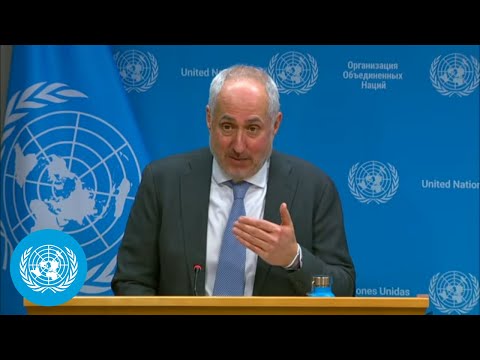
Spokesperson Steph said the United Nations and its humanitarian partners are sustaining aid deliveries in the Gaza Strip while warning that needs remain acute.
"As of today, our health partners have vaccinated more than 6,000 children across the Gaza Strip," Steph said, describing a recently launched catch‑up campaign for children under 3. On food security, Steph said UN partners are providing bread to at least 43% of the population daily and that monthly household flour distributions have reached about 1,200,000 people.
The briefing outlined shelter and winter assistance the UN and partners have provided over the past week: "We and our humanitarian partners reached over 7,500 families with tents, tarpaulins, sealing‑off kits, mattresses, and blankets," Steph said, and added that child‑protection partners delivered winter clothes to about 1,400 children. The spokesperson cautioned that "over 1,000,000 people still require urgent shelter support."
Reporters pressed the UN on access. Edie asked whether the Rafah crossing had reopened for cargo and humanitarian deliveries; Steph replied, "Short answer is no," and said the UN is encouraging Israeli authorities to reopen the crossing for cargo, commercial and humanitarian movement and to allow people to enter or leave Gaza.
The spokesperson reiterated operational limits: healthcare evacuations and expanded humanitarian delivery depend on permissions and safe access. When asked whether the UN could assist evacuations of tens of thousands needing medical care, Steph said WHO ‘‘has already played a critical role whenever there’s an opportunity for them to evacuate people they know about,’’ and noted bilateral arrangements by regional governments for some medical transfers.
Next steps: the UN said more convoys are planned in the coming days, but access constraints and the closure of key crossings remain obstacles to scaling up assistance.
The briefing closed without an announcement of a new, sustained corridor for large‑scale medical evacuations or a timetable for reopening Rafah.