
Actuary tells welfare committee KanCare rates account for ~5% nonutilizers; projections within 1% of actuals
Get AI-powered insights, summaries, and transcripts
Subscribe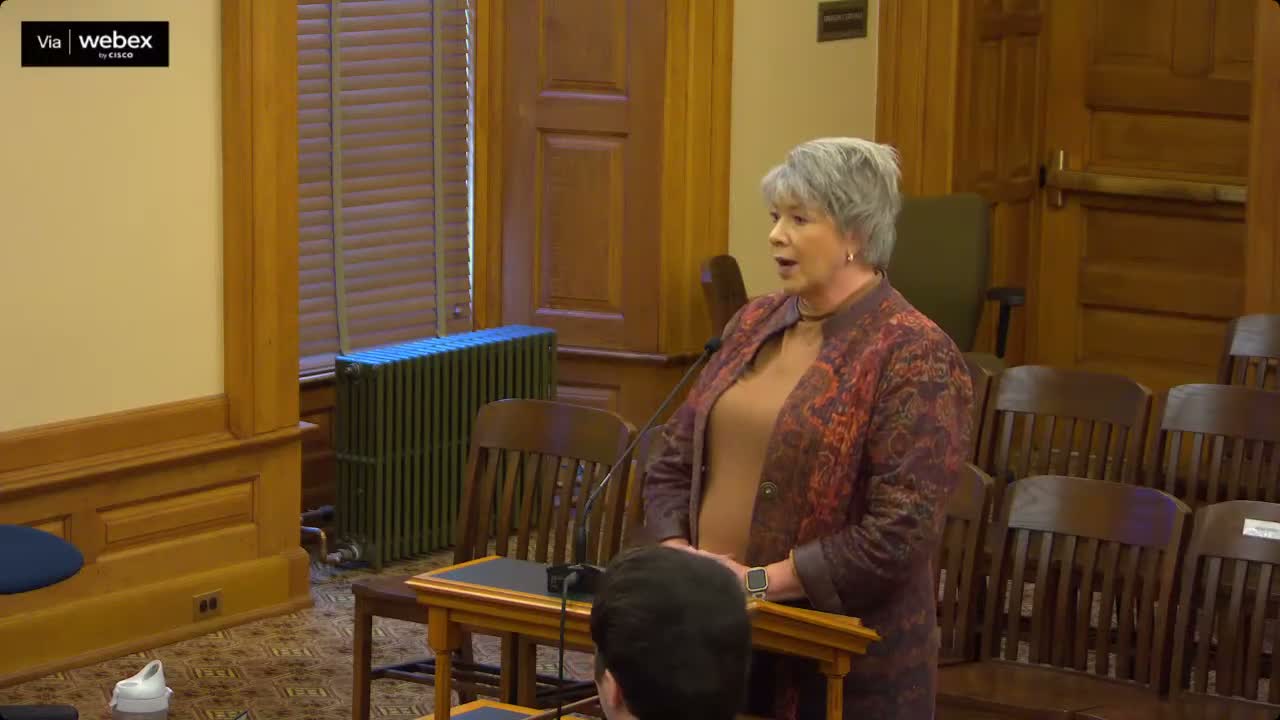
Summary
A contracted actuary told the Committee on Welfare Reform that KanCare capitation rates prospectively include a built-in allowance for members who do not use services (about 5% of enrollees) and that state projections and plans' incurred payments have matched within roughly 1% in recent years.
Seth Adamson, the state's contracted actuary with CBIZ Optimus, told the Committee on Welfare Reform on Jan. 22 that capitation rates for the KanCare managed-care program are set to reflect both members who use services and those who do not.
Adamson said federal rules require a credentialed actuary certify rates and cited federal oversight by the Centers for Medicare and Medicaid Services. He described capitation as a prospective per-member-per-month (PMPM) payment that transfers financial risk from the state to managed care organizations (MCOs) and said Kansas structures rates so plans'profit margins are tightly controlled: "we do try to set our rates at their profit margin is about 1%," he said.
The actuary explained how rates are tailored by population and region rather than using a single statewide average. "We set different rates by population," he said, noting the state calculates nearly 40 different payment rates split across four regions to avoid overpaying plans that enroll lower-cost populations and underpaying plans with higher-cost enrollees.
On members who do not use services in a calendar year, Adamson said the KanCare data show roughly 5% of enrollees have no recorded utilization in a year, concentrated among healthier children and adults. Rather than paying the utilizer-only average, the state builds the $0 months into the prospective payment so the PMPM paid to plans covers both utilizers and nonutilizers.
Adamson pointed the committee to recent historical validation: using calendar years 2023 and 2024 data, prospective state payments and the health plans' actual incurred medical expenditures were within about 1% of each other, a level he described as consistent with actuarial soundness and good predictive performance.
Committee members asked operational questions. Representative Humphreys sought confirmation that prior authorization decisions are implemented by health plans under state policy; Adamson confirmed plans operate prior authorization processes in-state while applying the state'defined benefit rules. Representative Roser asked about prior-authorization error rates and electronic integrations between providers and MCOs; Adamson said he did not have those numbers on hand but offered to follow up in writing.
The committee did not take formal action on rate-setting at the Jan. 22 meeting. Adamson offered to provide follow-up research on direct primary care arrangements and on provider integration and error-rate data if the committee requests it.