
Committee hears bill directing KDHE to adopt potable‑reuse rules; KDHE warns of costs and timeline
Get AI-powered insights, summaries, and transcripts
Sign Up Free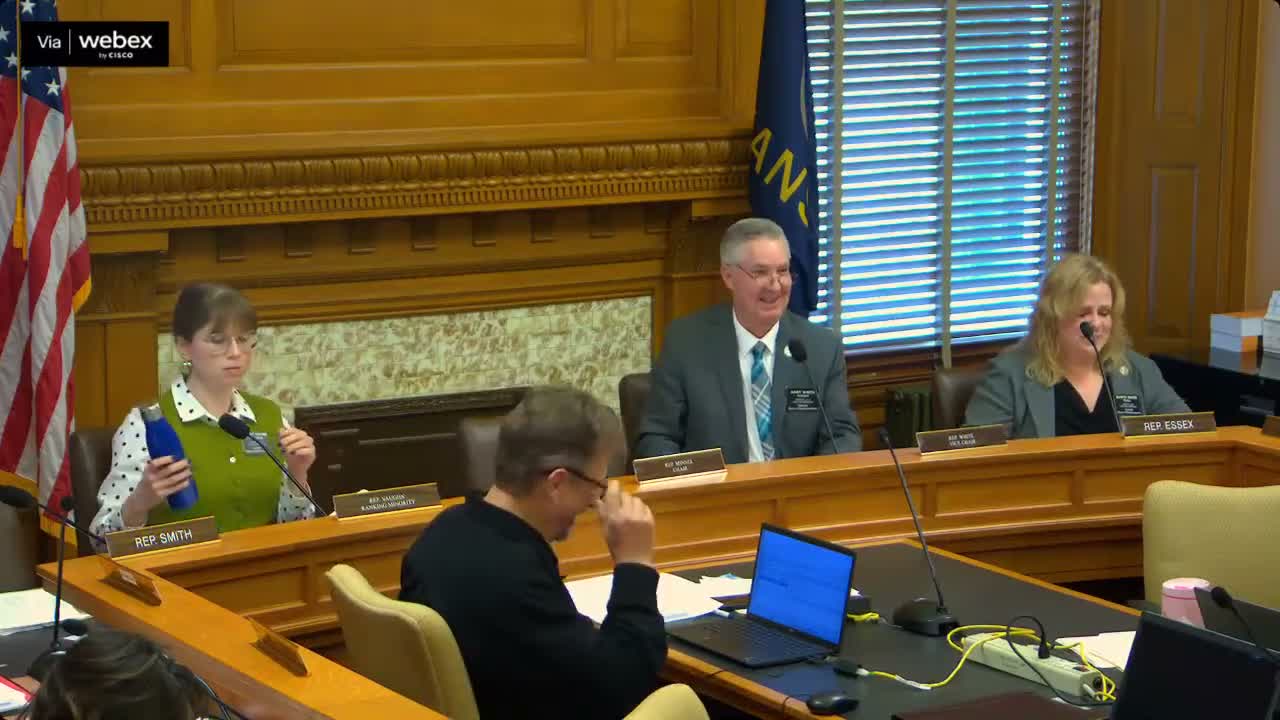
Summary
House Bill 24-62 would require KDHE to adopt rules by July 1, 2028, allowing direct and indirect potable reuse of treated wastewater. Municipal utilities and reuse advocates supported the bill; KDHE supports the policy but cautioned the two‑year timeline and estimated additional staff and contract costs.
The House Committee on Water received testimony on House Bill 24-62, which would direct the Secretary of the Kansas Department of Health and Environment to develop rules permitting direct and indirect potable reuse of treated wastewater by July 1, 2028.
Kyle, the bill presenter, said the bill adds definitions for direct and indirect potable reuse and gives KDHE responsibility to develop implementation standards. He noted the state must comply with federal obligations under the Safe Drinking Water Act and Clean Water Act when regulating public water supplies.
KDHE’s William Carr said the agency supports the development of science‑based reuse regulations but raised “strong concerns about the resources needed and the time frame.” Carr told the committee there are no federal potable reuse standards to follow and that other states’ rulemaking processes have taken between six and ten years when including extensive public engagement and research. "We don't know how much research we're going to have to do," Carr said, and estimated the agency would need two additional staff and consultant contracts to complete the work on a compressed timeline.
Municipal proponents said the bill would help utilities plan and evaluate reuse projects. Gary Janssen, director of public works for Wichita, urged the committee to allow adequate planning time for cities and suggested collaboration between KDHE and interested municipalities. The Water Reuse Association’s Kansas section and the League of Kansas Municipalities both testified in support, saying regulations would help communities assess feasibility, costs and performance standards for reuse projects.
KLRD’s fiscal summary reported KDHE’s estimate of $601,200 in SGF expenditures annually beginning in FY2027, two staff positions (an environmental specialist and an environmental engineer) and two consultant contracts that KDHE estimated at roughly $200,000 each. Other agencies (Kansas Water Office, League of Kansas Municipalities) indicated no direct fiscal effect for their organizations.
Committee members asked KDHE about the challenges of developing standards without federal guidance and whether the two‑year deadline is feasible; KDHE said the timeframe would be difficult and could require more contract spending to meet the deadline. No committee vote on the bill was recorded during the hearing.
The committee closed the hearing after oral proponents presented and written comments were entered into the record.