Coalition urges city to back HUD lead‑hazard capacity grant after testing finds elevated levels in children
Loading...
Summary
Janice Lee and partners presented a HUD Lead Hazard Reduction Capacity Building Grant proposal, citing local testing that found about six of 20 children with high lead levels; staff said the NOFO allows CDBG to meet the 10% match and proposed a follow‑up meeting with finance to assess city support.
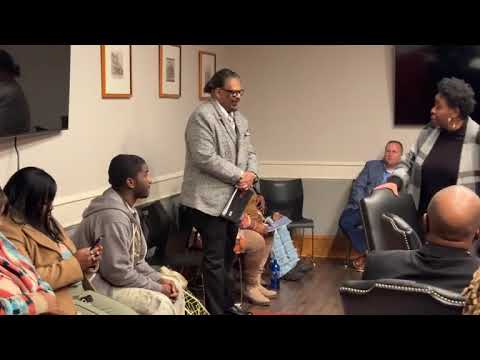
Janice Lee, representing the Hampton Homes Coalition and West End Foundation, urged the Anniston City Council to consider partnering on a HUD Lead Hazard Reduction Capacity Building Grant after recent community testing found several children with elevated blood lead levels.
Lee said the coalition’s presentation links the proposed project to the city’s 2023–2027 consolidated plan and the 2024 annual action plan and emphasized community outreach and capacity building. “Calhoun County [is] among Alabama’s top counties for elevated blood level lead levels in children,” Lee said, citing HUD data provided in the coalition packet. She told the council that at a recent testing event “out of 20 something kids, we had, like, 6 kids who had high level high lead levels in their blood.”
Why it matters: Lead exposure in early childhood can affect behavior and cognitive development. Lee and partners proposed using the capacity‑building grant to expand testing, education and in‑home lead‑hazard reduction efforts and to train local contractors and volunteers in lead‑safe work practices.
City staff reviewed the grant’s financial parameters and next steps. A council official said the NOFO lists a maximum award of 22,500,000 and a minimum of 1,000,000 and that the program requires a 10% matching contribution. The official noted the NOFO states that Community Development Block Grant (CDBG) funds can be used to satisfy the match, which would allow the city to avoid drawing on the general fund for the local share. Staff recommended the council schedule a meeting with the CDBG coordinator and the finance director to identify the appropriate award amount, confirm available CDBG resources, and provide data to justify an application.
Pastor Dan, a community partner who identified himself during the meeting, said local nonprofits have mobilized volunteers and training, and urged funding to support tutoring and services for children affected by lead exposure. “We need funds so that we can, properly process this and get this thing off the road,” he said.
No formal council vote was taken. Council members asked staff to follow up with the CDBG coordinator and finance director to determine whether the city will commit local match funds and to prepare a synopsis for a future council decision.
Next steps: Staff will meet with the CDBG coordinator and finance director and return to the council with data on need and a recommended award amount; the council has not approved applying for the grant or committing funds.