Get Full Government Meeting Transcripts, Videos, & Alerts Forever!
Get email alerts on the Mod Report topic
No spam. Unsubscribe anytime.
MOD director reviews priorities: transition to DAS, legislative bills and community concerns over enforcement reductions
Summary
Director Eli Jelarden summarized MOD functions, announced a transition to the Department of Disability and Aging Services (DAS) and rebrand to the Office on Disability and Accessibility, and flagged state bills and local legislative changes that MOD says could delay or limit accessibility enforcement.
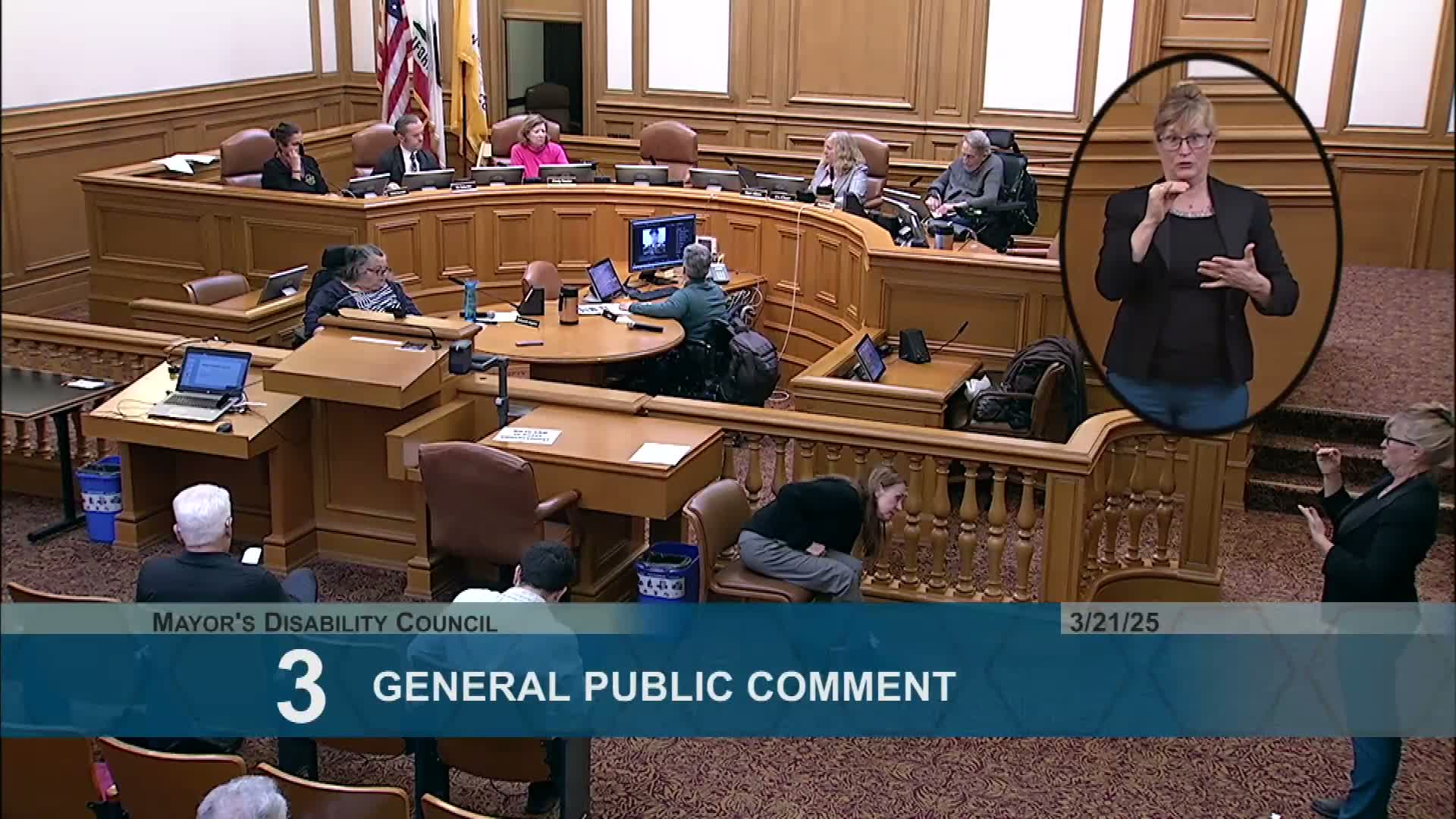
Eli Jelarden, director of the Mayor's Office on Disability (MOD), opened the March 20 meeting with an overview of the office's role in coordinating ADA grievances, monitoring the city's ADA transition plan, and providing technical assistance on accessibility and digital inclusion.
Jelarden explained a major administrative transition: as of April 1 MOD will move from the City Administrator's Office into the Department of Disability and Aging Services (DAS) and will rebrand as the San Francisco Office on Disability and Accessibility (ODA). He said the move will put the office in a programmatic tier focused on community services and increase capacity to support accessibility work across city departments.
The director reviewed several local and state policy items that MOD is monitoring. Locally, MOD said the Board of Supervisors passed "Beyond the Front Door," replacing the former Accessible Business Entry Program (ordinance 5,116) and expanding accessibility focus beyond building entrances to interior spaces and customer service. Community commenters and advocates voiced concern that some legislative changes reduce or delay enforcement and replace mandatory remediation with education and incentives.
At the state level Jelarden outlined multiple bills MOD is tracking: bills that would impose 120-day notice-and-cure periods before private ADA claims (noted as SB 84 and AB 780/AB 641 in the presentation), bills to strengthen Medi-Cal community-based care, and emergency-preparedness bills aimed at ensuring services for older adults and people with disabilities during disasters. He said MOD is closely monitoring the Access for All program established under state legislation (listed in the presentation) and raised concerns that notice-and-cure proposals could reduce accountability for accessibility compliance.
Jelarden also noted operational work: rollout of an ADA grievance database; curb cut coordination with Public Works; accessibility upgrades at SoMa Arts Cultural Center and Zuckerberg San Francisco General Hospital auditorium; and preparations for the ADA anniversary celebration later in the year.
He closed by urging council members and community partners to follow capital planning and legislation timelines and offered to provide more detailed materials on MOD's website.