
KDOT secretary says IKE program is on track but inflation and federal uncertainty will reduce what can be delivered
Get AI-powered insights, summaries, and transcripts
Subscribe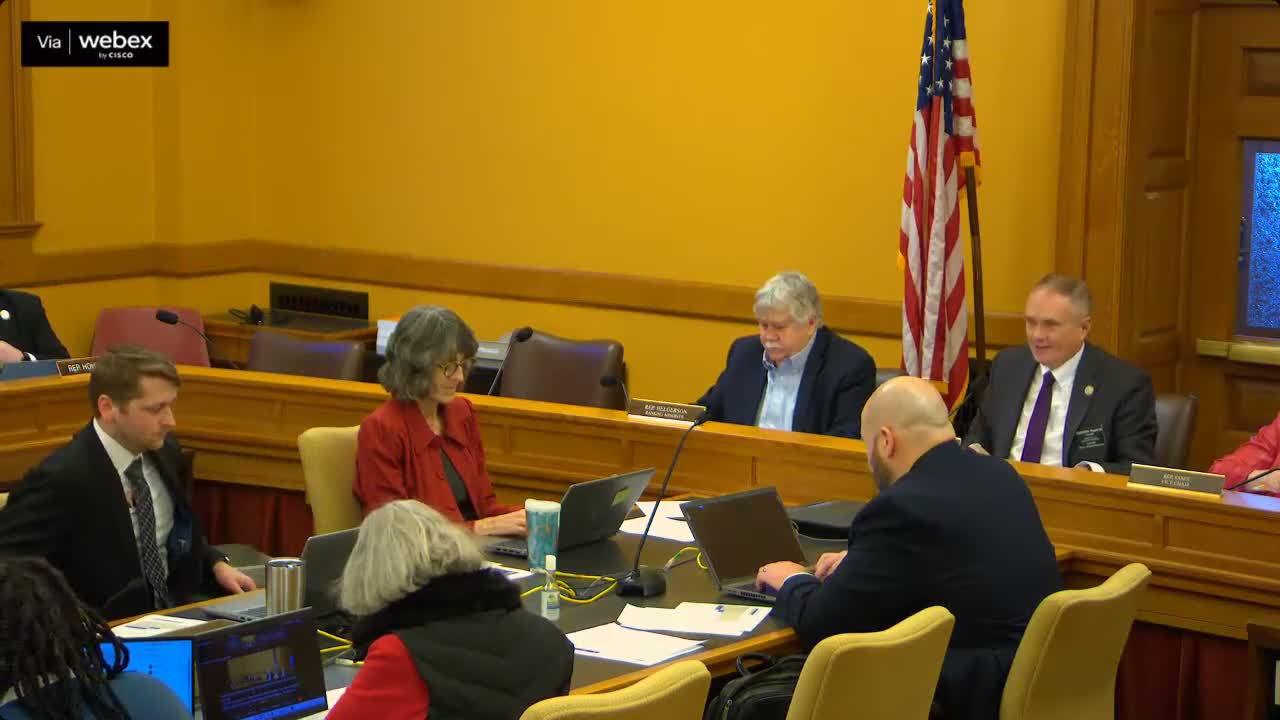
Summary
Secretary Calvin Reid told the House Committee on Transportation that Kansas’s 10-year Eisenhower (IKE) program has delivered major work but faces a constrained second half because construction costs are ~66% higher than 2021 and federal funding is uncertain when IIJA expires in September.
Secretary Calvin Reid gave the House Committee on Transportation a midpoint progress report on the Eisenhower (IKE) transportation program, saying the agency has delivered work statewide but expects to deliver fewer projects in the program’s second half because of rising construction costs and federal funding uncertainty.
Reid, who identified himself as "Calvin Reid, secretary of transportation," told the committee that highway fatalities remain a priority. "Highway fatalities, I think, are unacceptable," he said, reporting a slight uptick in 2025 to 361 fatalities and noting nearly half of those occur on locally owned roads.
Reid said revenues into the IKE program are about 20% higher than projected in 2020, driven by sales tax and federal reimbursements, but that motor fuels tax collections have been flat for years. He warned the Legislature and committee to expect pressure on the program as construction inflation outpaced revenue gains: "The result, prices in 2025 are about 66 percent higher than what they were in 2021," he said, illustrating the impact by saying a project budgeted at $1,000,000 in 2021 now costs $1,660,000.
Using five years of data, KDOT now projects total program spending of about $11.5 billion — roughly 16% above the original estimate — while acknowledging the agency will likely deliver less construction than originally planned. Reid urged prioritizing highest-value projects and said KDOT is focusing on preservation, modernization/expansion and local opportunities to maximize impact.
Reid summarized IKE accomplishments: more than 9,500 miles of roadway and 575 bridges improved; more than $107,000,000 in modernization and expansion completed; $1,600,000,000 under construction; $1,000,000,000 committed with scheduled lettings; and about $2,800,000,000 in the development pipeline. He also highlighted mode investments: airport funding raised from $5 million to $15 million annually, a $10 million annual state fund for short-line rail, and federal pass-through funds for transit and bike/ped projects.
On federal funding, Reid reminded members that the current federal surface transportation authorization (IIJA) expires in September and that future federal reimbursements will depend on the next authorization’s priorities. "We know that federal reimbursement will be heavily impacted by priority set in the next surface transportation authorization," he said, warning that uncertainty in federal formula or discretionary funding could affect KDOT’s ability to turn dollars into construction.
Reid closed by noting KDOT has reached more than 1,000 Kansans through biannual local consults and by urging continued legislative partnership to ensure high-priority projects are selected and funded.
The committee followed with questions about bonding, revenue options and the department’s planning horizon; Reid said bonding timing and outside financial advice informed recent decisions and reaffirmed KDOT’s willingness to return to the committee with additional analysis.