Get Full Government Meeting Transcripts, Videos, & Alerts Forever!
Get email alerts on the Renewable Energy topic
No spam. Unsubscribe anytime.
Cottonwood Heights council hears how URC automatic enrollment could add about $3–$4 to monthly bills; outreach requested
Summary
City planners told the council that adopting the Utah Renewable Community (URC) would automatically enroll local Rocky Mountain Power customers and could add an estimated $3–$4 per month to bills; council members pressed staff for more public outreach, governance clarity and details about opt-out fees before any ordinance.
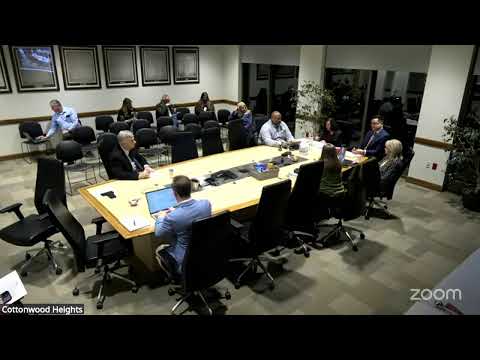
Cottonwood Heights planners presented the Utah Renewable Community (URC) program on Jan. 20, telling the city council that the program would automatically enroll local Rocky Mountain Power customers and fund new utility-scale clean energy to offset annual electricity use.
Planner Sheldon, who led the presentation, said URC is a coalition of 19 cities working with Rocky Mountain Power and that the application has moved to the Utah Public Service Commission (PSC). "All residents within the city will automatically be enrolled," Sheldon said, explaining the PSC could make a decision soon and the program could be implemented as early as March 2026 if approved.
Why this matters: the URC is designed to increase the share of clean energy serving participating communities, but it would also add a recurring line to household utility bills unless customers opt out. Sheldon told council members the URC's proposal anticipates a typical household increase of about $3–$4 per month; Rocky Mountain Power internally proposed higher rate adjustments in public filings. He said the city already paid about $21,000 toward the URC application (roughly 3% of an approximately $700,000 program budget) and that the city would be responsible for mailing notices to customers if it adopts the program — an estimated $18,000–$19,000 expense.
Council concerns and discussion: several council members pressed staff on governance, cost and the practicality of the opt-out process. One council member called automatic enrollment "a tax on basic services" and argued that a short opt-out window makes the choice illusory for many residents. Others warned that the URC's governance model — one vote per participating city — could leave smaller cities with little leverage when larger cities vote together.
Other council members urged caution but emphasized the public-health and regional air-quality benefits of increasing clean energy. "We have months ahead to engage the public and educate and use our resources," one council member said, urging broad outreach before a council decision.
Technical and procedural details: Sheldon said URC received multiple bids (10 submitted; a shortlist of about five is in negotiation) and explained that eligible projects must be located in Utah, Wyoming or Idaho and be interconnected to the PacifiCorp transmission grid. She said projects under consideration would generally be on the order of tens to hundreds of megawatts and must be operational by late 2029 under URC timelines. The city would have a 90-day no-fee opt-out period if it adopts the program; later opt-outs would carry a termination fee that Sheldon said has been discussed in the range of a few dollars to about $20, though the PSC will determine final terms.
Next steps: Council did not take a vote. Members asked staff to pursue additional public outreach — city web pages, mailings and a possible community meeting — and to report back with resident feedback and any PSC determinations. Staff reiterated there is no penalty for the city to decline adoption once the PSC issues a decision.
The council then moved on to a joint general-plan workshop with planning staff and consultants.