Get Full Government Meeting Transcripts, Videos, & Alerts Forever!
Get email alerts on the Commercial Development topic
No spam. Unsubscribe anytime.
Workshop held for proposed 109th Avenue gas station; commissioners press on design, stormwater and pipeline easement
Summary
A workshop on a proposed gas station at 200 109th Ave covered site constraints (a gas pipeline bisecting the parcel), a masonry building design, stormwater filtration measures and delivery logistics. Commissioners emphasized masonry materials, lighting controls, sidewalks and stormwater protections; no vote was taken.
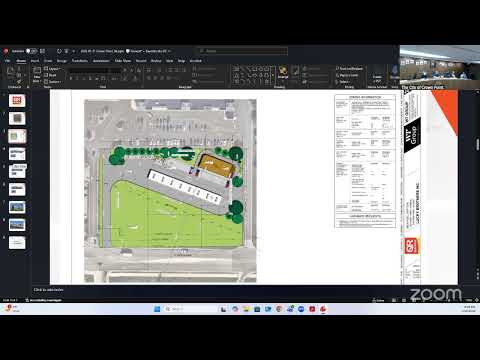
At a Jan. 26 workshop the planning commission reviewed a proposed gas station and convenience store at 200 109th Avenue presented by WT Group architects and owner Shamir Manhani. The site is triangular and bisected by a gas pipeline easement, which the project team said constrained usable acreage but left a buildable triangle outside the easement.
Architect Chris Kulusevski described a masonry, four-sided 3,800-square-foot building and a single-row canopy design intended for efficiency and safety. The applicant said the canopy and site plan intentionally eliminate a drive-through. Kulusevski said the project team had located the pipeline with the owner and utility and planned only a single power and data conduit crossing, which the pipeline operator had approved for the intended use.
Commissioners asked detailed questions about landscaping in the unusable pipeline triangle, the texture and quality of the masonry (expressing a preference for true brick or concrete masonry rather than EIFS), lighting and dark-sky measures, sidewalks, and stormwater controls. The applicant described a "belt-and-suspenders" approach to stormwater treatment that includes filtration devices and an AquaSwirl vortex separator prior to detention to remove petroleum contaminants.
Commissioners also urged careful controls on outdoor merchandising and window signage, and suggested buffering and landscaping to reduce light spill to nearby residences. The commission provided design feedback that the project team said it would consider before a formal application; because this was a workshop no vote was taken.
Next steps: applicant to refine plans in response to commissioner feedback and return with a formal application when ready.