
Providers and clients tell Minnesota lawmakers prepayment reviews destabilized services
Get AI-powered insights, summaries, and transcripts
Subscribe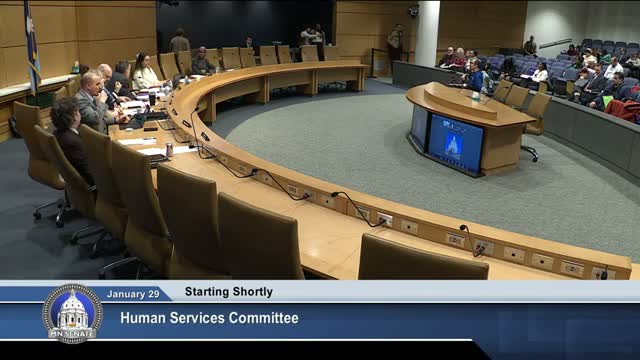
Summary
At a joint legislative hearing, providers, home‑care workers and people with disabilities said DHS’s Dec. prepayment reviews and payment pauses left agencies without operating funds, triggered layoffs and closures, and jeopardized clients’ housing and health. Witnesses called for clearer timelines, due process and continuity‑of‑care protections.
At a joint hearing of Minnesota’s Senate and House human services committees, providers, caregivers and people with disabilities told lawmakers that the Department of Human Services’ rollout of prepayment reviews and payment pauses in December precipitated payroll shortfalls, agency closures and immediate risks to clients who rely on home‑ and community‑based supports.
The testimony centered on continuity of care. Jonah Giese, a legal advocate at the Minnesota Disability Law Center, said the state’s actions to address alleged fraud have left "hundreds, if not thousands" of people without services and at risk of eviction, emergency‑room visits or being moved into more restrictive settings. "These interventions will continue to be at the expense of people with disabilities," he said. Providers and workers across Greater Minnesota and the Twin Cities described similar harms: missed paychecks, staff departures, lost lines of credit and program closures that forced families into crisis.
Why it matters: witnesses said disruption to routine supports can rapidly escalate to health emergencies and homelessness. Multiple providers described operating on razor‑thin margins and being unable to bridge extended delays—examples included an agency in Duluth that closed after serving about 400 people and a provider in Hermantown (Heartland PCA) cited as serving roughly 500 clients and 50 staff who were left without operating funds. Heather Wright, CEO of North Star Community Services, said an unexpected withholding of roughly $600,000 over four weeks forced the agency to miss a $300,000 payroll and lose 30 employees.
Committee members and witnesses described several recurring problems. Providers said DHS and its contractors (discussed in testimony as Optum) issued notices that allowed remits or holds of 30–90 days but offered little operational guidance. Several witnesses said remittance advices, denial notices and the credible‑allegation‑of‑fraud (CAF) process lacked specifics about the allegations or documentation required for rebuttal. Providers reported banks would not extend short‑term credit in the face of payment uncertainty, and some agencies said they had to absorb payroll from reserves or risk closure.
"When payments were paused and schedules slipped, PCAs left," said provider Josh Berg of Accessible Space Inc., summarizing the human cost and urging five immediate fixes: a single centralized communications hub, published prepayment‑review timelines, guaranteed due process, mandated continuity‑of‑care protocols for any payment pause or enforcement action, and a standing stakeholder body to review policies before rollout.
Evidence and numbers presented at the hearing included 15 signed testifiers for the day’s panel; testimony that DHS previously counted roughly 179 instances tied to frozen payments; providers’ examples of 30‑day delays to receive previously expected funds; and union testimony that referenced federal threats to withhold large sums from Medicaid programs. Witnesses repeatedly asked the committee to require clearer timelines and an appeals or notice process that allows providers to respond before payments are withheld.
What lawmakers signaled next: members thanked witnesses and repeatedly pledged to seek more information from DHS and other state actors. Chair Hoffman and other members said the committee may reconvene early in session and pursue follow‑up hearings and potential legislative remedies, emphasizing a need to balance fraud prevention with protections that guarantee continuity of care.
The hearing adjourned after members discussed next steps and possible bills to address communication, due process and emergency stabilization for providers.