
Audit finds Minnesota ombudsperson office under-resourced, with inconsistent complaint records and weak oversight
Summary
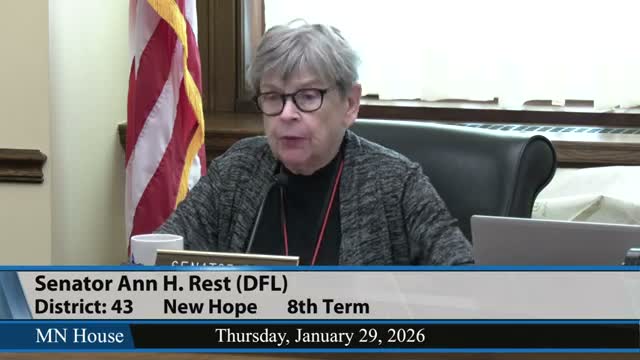
A Legislative Audit Commission hearing on Jan. 29 reviewed an OLA evaluation that found the Office of Ombudsperson for Families (OBFF) has broad statutory duties but limited staff and data, inconsistent complaint handling, weak board oversight, and unclear recent impact on children and families of color; OBFF leaders said they accept the recommendations.
St. Paul — The Minnesota Legislative Audit Commission on Jan. 29 received a program evaluation from the Office of Legislative Auditor (OLA) that concluded the Office of Ombudsperson for Families (OBFF) is struggling to meet its statutory responsibilities because of limited resources, inconsistent recordkeeping and insufficient oversight.
"We found that the office has not always fulfilled that role effectively in recent years," Deputy Legislative Auditor Jody Munson Rodriguez told commissioners as she introduced the review. Evaluation manager Caitlin Badger told the commission the office’s duties in law are broad — including requirements to monitor agency compliance with all child-protection laws as they affect children of color — while the agency has a small staff and modest appropriations.
Badger said OBFF reported a fiscal‑year 2025 appropriation of $845,000 and that the office has seven staff members (three ombudspersons and four other staff), which OLA deemed insufficient to monitor the wide range of agencies, courts and local entities covered by statute. "With a staff of 7 people and a budget of under $1,000,000, effectively monitoring all of these agencies' compliance with law . . . does pose significant challenges," Badger said.
The audit identified three broad problem areas: (1) OBFF does not appear to be fulfilling all duties required by law; (2) the office spends considerable time on activities not required by statute (including participation in work groups and policy discussions); and (3) oversight and accountability are weak. The report found that OBFF’s community boards and the required joint board frequently failed to meet statutory requirements, often lacked quorum or full membership, and rarely fulfilled the advisory duties set out in law.
On complaint handling, OLA found significant deficiencies in documentation and data collection. Badger told the commission that OBFF reported conducting 33 investigations in 2023 but that OLA could not verify that figure because case records and data were incomplete. OBFF also reported receiving "a little more than 500 complaints and inquiries" in 2023, but OLA said those figures were murky because the agency does not consistently define or record what is a complaint versus an inquiry.
"Because of this lack of data and documentation, we were unable to get clear answers to simple questions such as how many complaints has OBFF received or how many complaints did it investigate," Badger said. The audit recommended clearer complaint-handling policies, consistent data collection and improved transparency on the agency website about what the office investigates and how.
The OLA urged the Legislature to consider clarifying OBFF’s statutory duties and aligning resources accordingly. "We recommend that the legislature establish a single position within the office that is responsibility for leading it," Badger said, arguing that a single leader would create clearer lines of authority and accountability than the current model in which the three ombudspersons share equal responsibility.
OBFF leadership responded at the hearing. Anne Hill, the ombudsperson who identified herself as the Ombudsperson for African American Families, told commissioners the office "agree[s] with all of the recommendations" and acknowledged the challenges raised by OLA, including staffing shortages and operational disruptions during the audit period. Hill and her colleagues said the office lacked an investigator and other positions during parts of the review period and cited a failed 2019 case-management system purchase and extended family‑medical‑leave absences among administrative staff as operational obstacles.
Hill disputed characterizations that OBFF had been working on federal matters, saying the office focused on state statutes and state legislative processes. She also said OBFF accepts callers' self‑identification and that the office provides resources, consultations or investigations depending on the case, and that some of the recent legislative changes (including the African American Family Preservation Act) grew from concerns raised to OBFF.
Commission members pressed for concrete data and faster reform. Representative Quam asked OLA for more precise counts and budget breakdowns; Badger said some numbers exist in the report exhibits but also reiterated that function‑level expenditure data and consistent complaint outcome records are largely not collected. Several lawmakers said the Legislature needs to act to clarify statutory intent, ensure adequate staffing, and fix governance and oversight mechanisms. One commissioner suggested a sunset or expedited restructuring if improvements are not made.
The audit lists several formal recommendations, including that the Legislature refine OBFF’s statutory duties to align with realistic expectations, improve board oversight (including meeting frequency and attendance), create clearer reporting and data practices for complaint handling, and consider establishing a single senior leader for the office. OBFF representatives said they would work to implement recommendations and supply additional information requested by commissioners.
The commission concluded the hearing by thanking OLA staff and OBFF representatives. The Legislative Audit Commission did not take formal votes at the hearing; next steps would depend on legislative committees and appropriations action. For more detail, the OLA report and the OBFF written responses are referenced in the commission packet and the report exhibits cited during the presentation.

Create a free account
Unlock AI insights & topic search